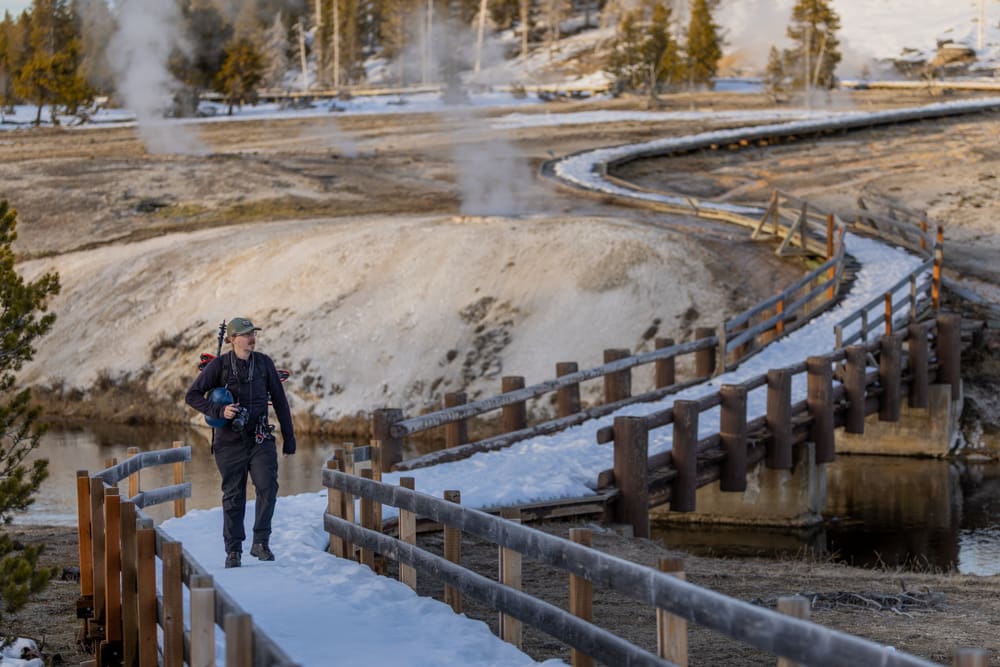
Canon EOS R5 Mark II, RF 100-300MM f/2.8 L IS USM @ 100mm | F/2.8 | 1/250 SEC | ISO 100
The Draw of Yellowstone
Yellowstone is famous for its unique geology and abundant wildlife, attracting more than 4.7 million visitors in 2024. It’s a hugely popular destination for family road trips during the summer. If you enjoy playing license plate games, you’ll likely see one from every U.S. state as well as every Canadian province. Listen closely and you’ll also hear a wide variety of languages—it’s a favorite destination for international travelers.
Most of these visits happen during the summer season, when the majority of roads, campgrounds, and visitor facilities are open.
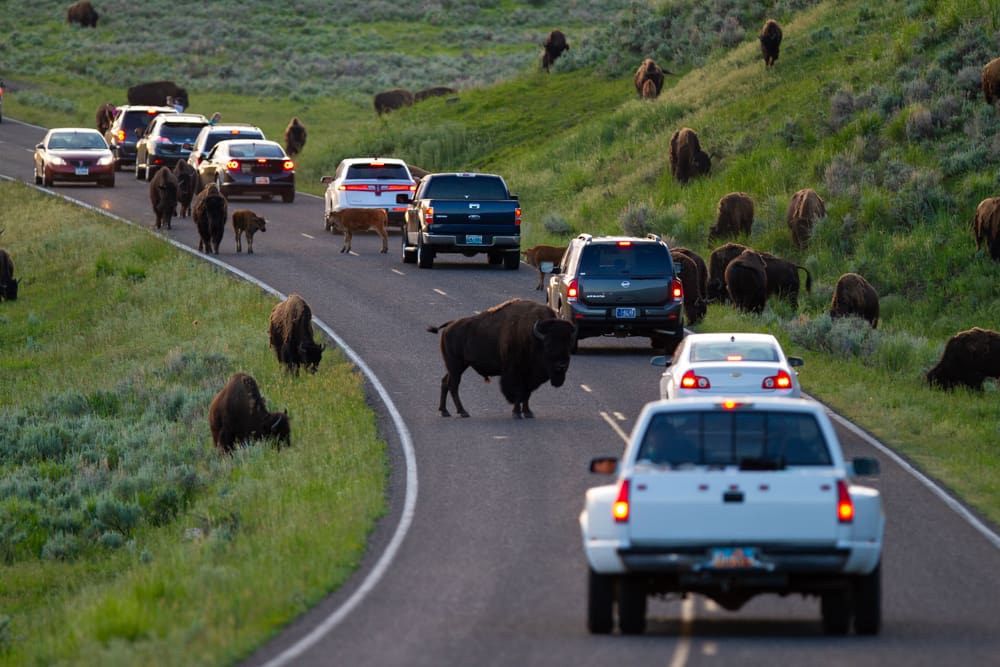
Canon EOS 7D, EF 300MM f/2.8 L IS USM | F/2.8 | 1/400 SEC | ISO 400
Wildlife back up in the Lamar valley on highway 212 during June.
In reality, Yellowstone has two distinct visitation seasons: summer and winter. During the shoulder seasons between them, most of the park closes temporarily. These closures allow snow to either accumulate or melt enough to make travel possible and safe. They also give park staff time to perform maintenance and prepare facilities for the dramatically different conditions of each season.
In many ways, Yellowstone in summer and Yellowstone in winter feel like two completely different parks.
Summer typically begins in April as sections of the park gradually reopen once the roads clear of snow. Areas begin closing again in September or whenever snowfall makes travel difficult. Roughly 97% of visitors arrive during this summer season, with July being the busiest month.
During this time you can expect long lines of traffic, crowded parking lots, fully booked campgrounds, and hundreds—maybe a thousand—of people gathering to watch eruptions at Old Faithful. With eruptions occurring roughly every 90 minutes, it becomes a constant spectacle throughout the day.
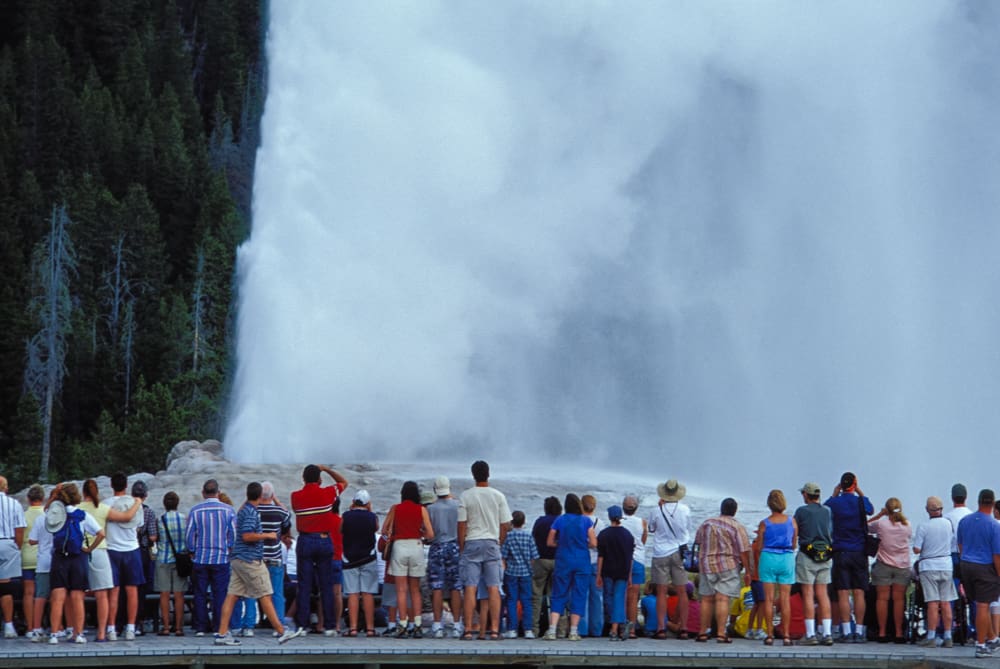
From the film archives: a typical summer crowd lines the circular boardwalk to view Old Faithful erupting.Camera data not recorded.
Fall Closures and Wildlife Viewing
In the fall, most roads close to vehicles before snowfall creates travel hazards. One important exception remains open year-round: U.S. Highway 212 (Beartooth Highway), which enters the park near Mammoth Hot Springs and runs along Yellowstone’s northern edge.
Because this road serves nearby communities, it stays open throughout winter and passes through the famous Lamar Valley. This area is a paradise for wildlife watchers and photographers, known especially for sightings of Yellowstone’s renowned wolf packs.
Once enough snow accumulates to support snow vehicles, the remainder of the park reopens again for winter travel—usually from mid-December to mid-March, depending on weather conditions and park maintenance.
Navigating Yellowstone in Winter
Winter travel inside the park is very different from summer travel. Most roads are closed to personal vehicles.
The only entrance open year-round is through Gardiner, Montana, which provides access to the Mammoth area. From here, visitors can explore the Mammoth terraces on foot or drive along Highway 212 for roughly 50 miles through the wildlife-rich Lamar Valley.
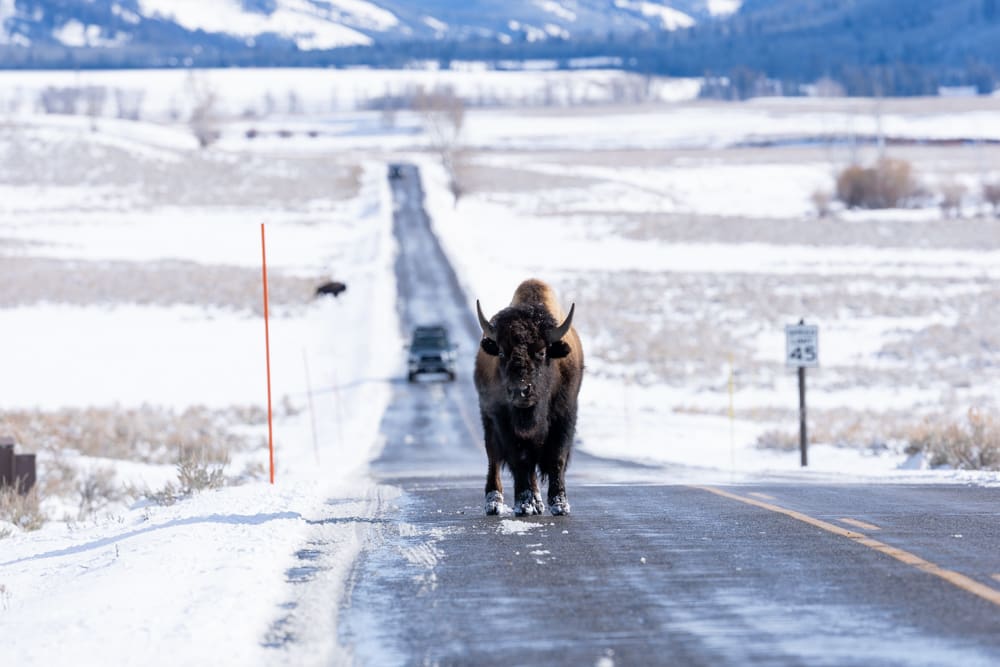
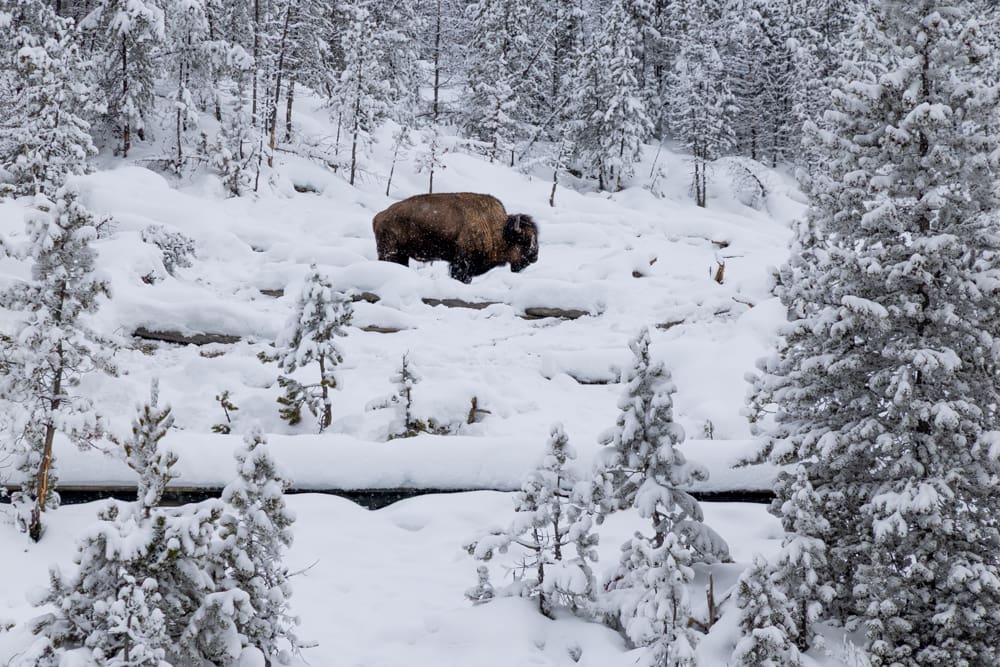
Canon EOS R1, RF 100-300MM f/2.8 L IS USM @ 300mm | F/5.6 | 1/500 SEC | ISO 100
A bison walks highway 212 in the Lamar valley serving as a good reminder to keep a sharp eye out for wildlife.
To visit other areas of the park, you’ll need to join a guided tour.
One option is a snowmobile tour offered by independent outfitters operating out of West Yellowstone, Montana or the Grand Teton National Park region of Wyoming. These guided day trips take visitors to many of the park’s most scenic destinations.
In recent years, snowmobile travel has sometimes been complicated by lighter snowpack conditions. Tour companies often adjust routes and schedules to ensure tours remain safe and enjoyable.
Another way to travel deeper into the park is through the park’s official concessioner, Xanterra Travel Collection. This company operates lodging, restaurants, and activities in several national parks, including Grand Canyon, Zion, and Death Valley.
In Yellowstone, Xanterra runs snowcoach transportation between Mammoth and Old Faithful, along with lodging and guided tours that allow access to places like the spectacular Grand Canyon of the Yellowstone—locations that are otherwise unreachable in winter.
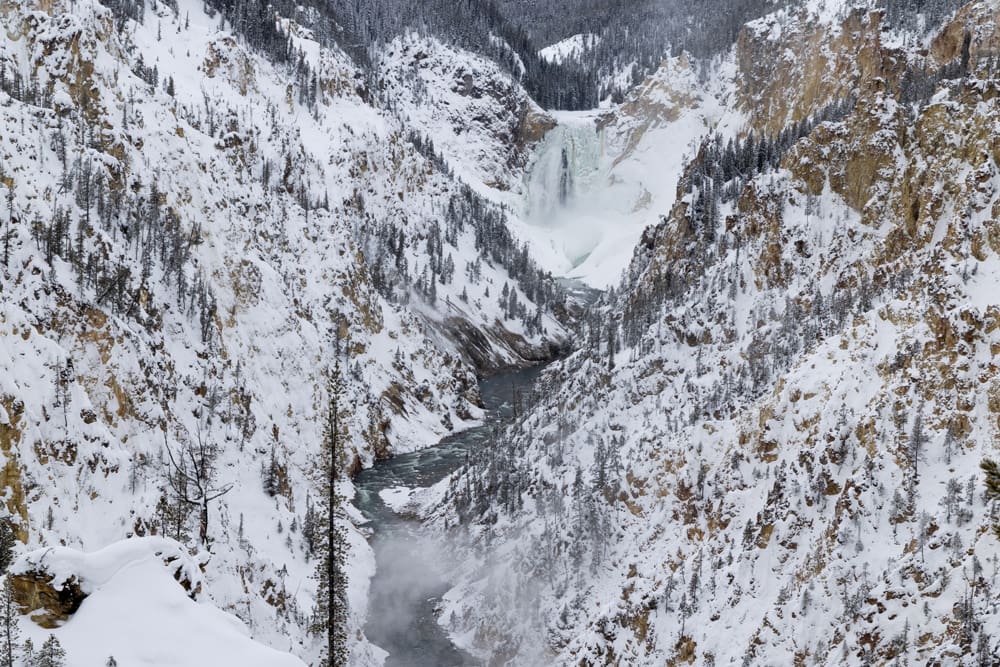
Canon EOS R5 Mark II, RF 24-105MM f4 L IS USM @ 70mm | F/16 | 1/30 SEC | ISO 100
A Winter Wonderland
A winter trip to Old Faithful is one of my favorite experiences in the entire National Park system.
Getting there requires a scheduled ride on a snowcoach—essentially a large van fitted with enormous tires designed to handle both pavement and deep snow. In earlier years, the trip was made using tracked vehicles that looked like something straight out of a World War II documentary. Some of these historic Bombardier snowcoaches can still be found on display around the park.
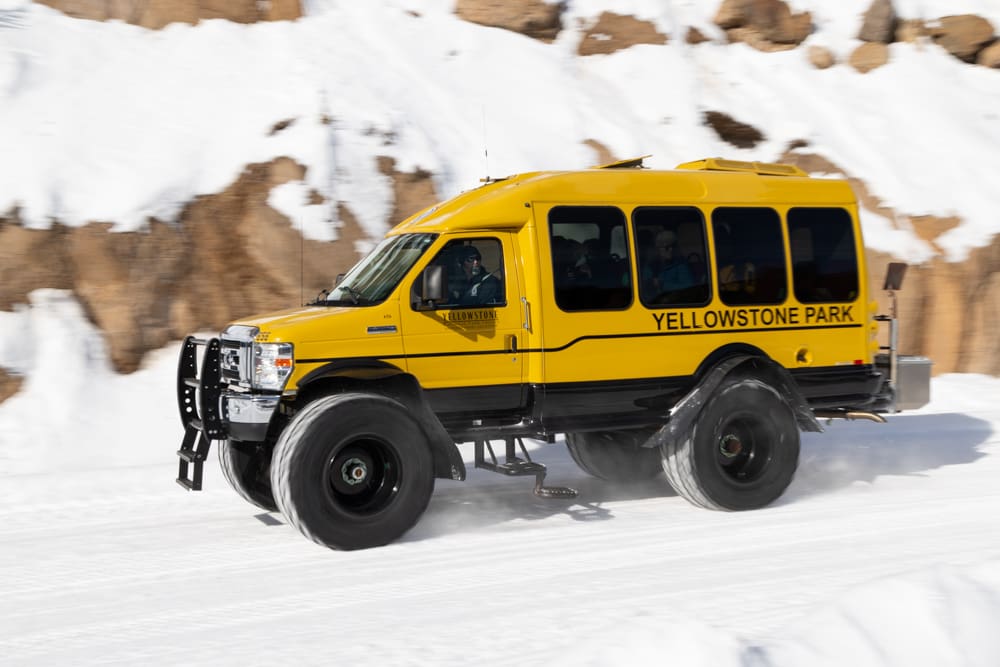
Canon EOS R5 Mark II, RF 24-105MM f/4 L IS USM @ 43mm | F/22 | 1/50 SEC | ISO 50
The three-hour snowcoach journey from Mammoth to Old Faithful is slow but enjoyable. Drivers act as guides, sharing insights about the park’s geology, history, and wildlife. Several stops along the route allow for rest breaks and photo opportunities.
Once you arrive, you can stay at the Old Faithful Snow Lodge or in a nearby cabin. While many facilities close for the season, a couple of restaurants, a gift shop, and a visitor center remain open.
Only a few hundred visitors typically stay in the Old Faithful area during winter. Watching a midday eruption might involve sharing the experience with about 50 people. If you wait for the final eruption of the day, you might find yourself completely alone.
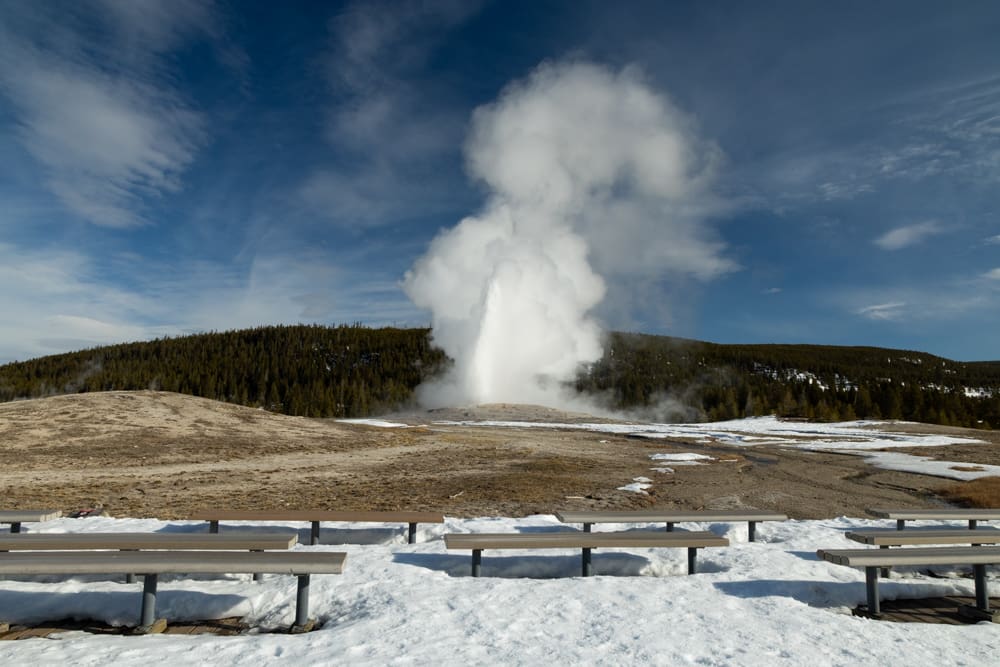
Canon EOS R5 Mark II, RF 24-105MM f/4 L IS USM @ 24mm | F/16 | 1/250 SEC | ISO 400
A Photographer’s Playground
The Old Faithful area contains far more than just one famous geyser. It’s part of a massive geothermal basin filled with boardwalks, trails, and fascinating geological formations.
Cross-country skiing and snowshoeing are the most popular ways to explore the region. Snowcoaches can even drop skiers off at more remote trailheads for longer excursions.
Two factors make winter photography in Yellowstone particularly special: cold temperatures and a lack of crowds.
With so few visitors, it’s easy to wander just a few hundred meters from the lodge and find yourself alone in a vast winter landscape. On longer outings, it’s entirely possible to go hours without seeing another person.
The cold also enhances the visual drama. Lower temperatures intensify the steam rising from geysers and thermal pools. Add a fresh layer of snow and the entire landscape becomes a surreal scene—something that feels closer to science fiction than reality.
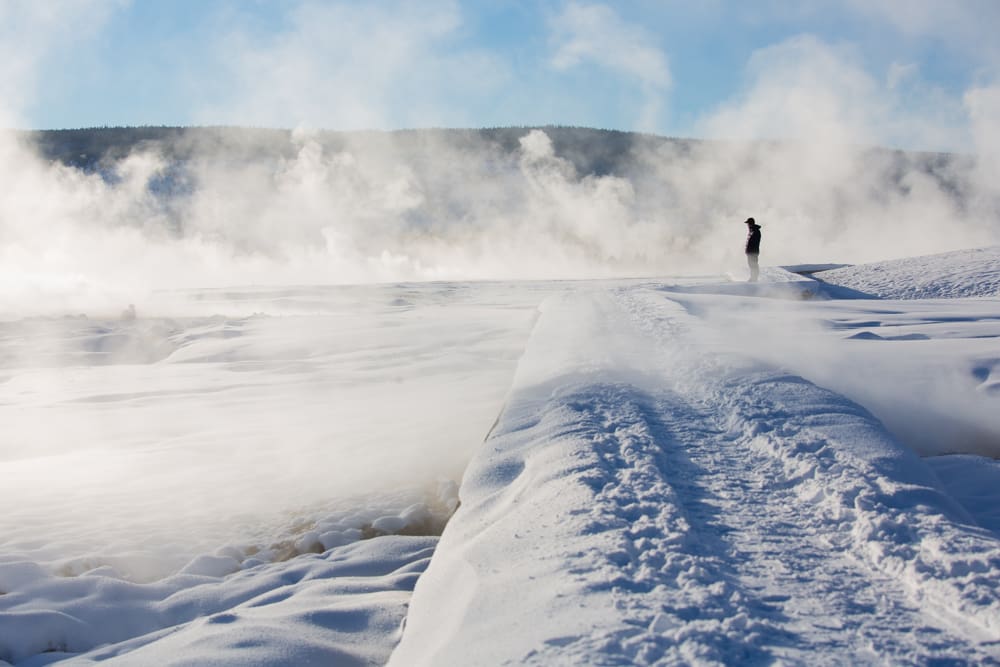
Canon EOS 5D Mark III, EF 70-200MM f/4 L IS USM @ 70mm | F/8 | 1/125 SEC | ISO 100
From a photography perspective, it’s a playground from sunrise well into the night.
Low winter sunlight produces long, dramatic shadows, especially when photographed as side-light. Snow reflects light back into darker areas, softening contrast and producing more balanced exposures.
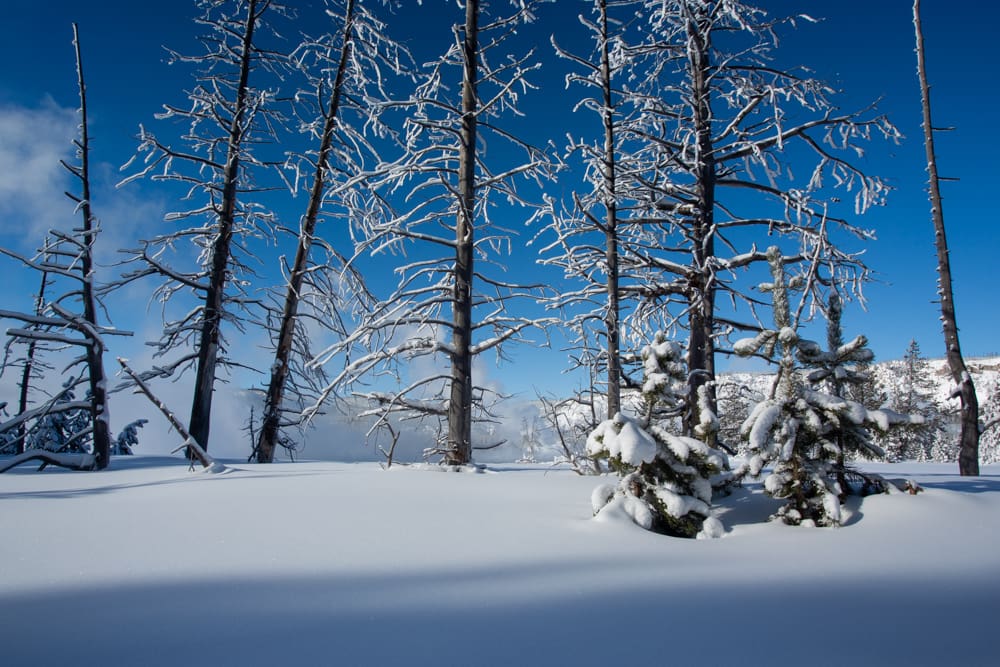
Canon EOS 5D Mark III, EF 17-40MM f/4 L USM @ 22mm | F/16 | 1/30 SEC | ISO 100
On cloudy days the park transforms into a natural black-and-white world. One useful technique is setting your camera to capture RAW files while displaying images in monochrome. You’ll still record full-color images, but your viewfinder will show the scene in black and white—making it easier to visualize strong monochrome compositions.
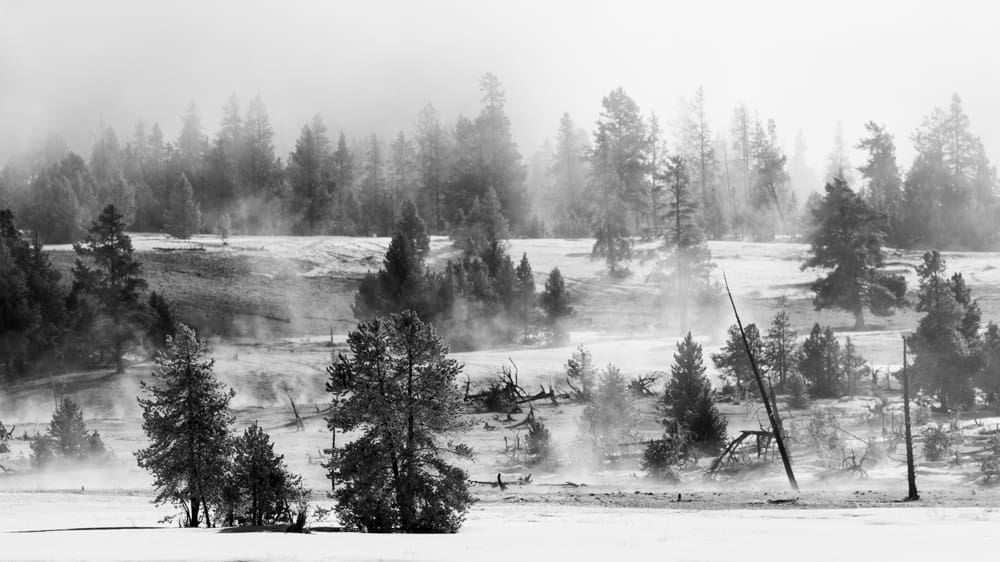
Canon EOS R5 Mark II, RF 100-300MM f/2.8 L IS USM + Extender RF1.4x @ 420mm | F/4 | 1/3200 SEC | ISO 100
If snow begins to fall, the environment becomes even more dynamic. Falling snow adds texture and atmosphere, turning ordinary landscapes into layered compositions. Wildlife photographed in these conditions gains an additional storytelling element through environmental context.
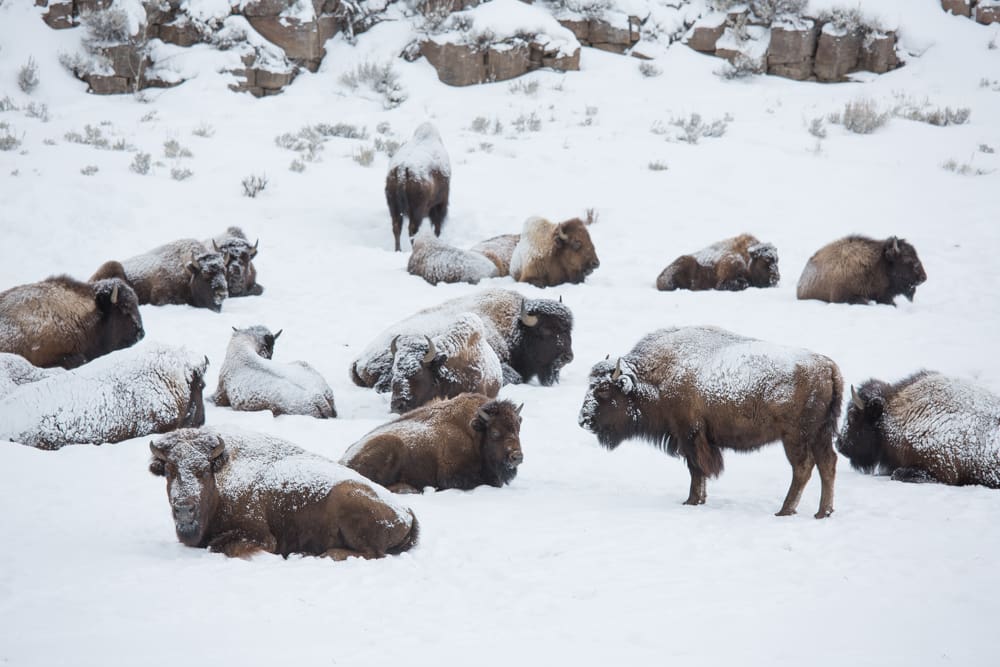
Canon EOS 5D Mark III, EF 70-200MM f/4 L IS USM @ 170mm | F/5.6 | 1/200 SEC | ISO 100
Photography doesn’t have to end at sunset either.
Old Faithful sits far from major cities, making it an excellent location for astrophotography. With minimal light pollution, even lenses with maximum apertures of f/4 can capture impressive night sky images when paired with a tripod.
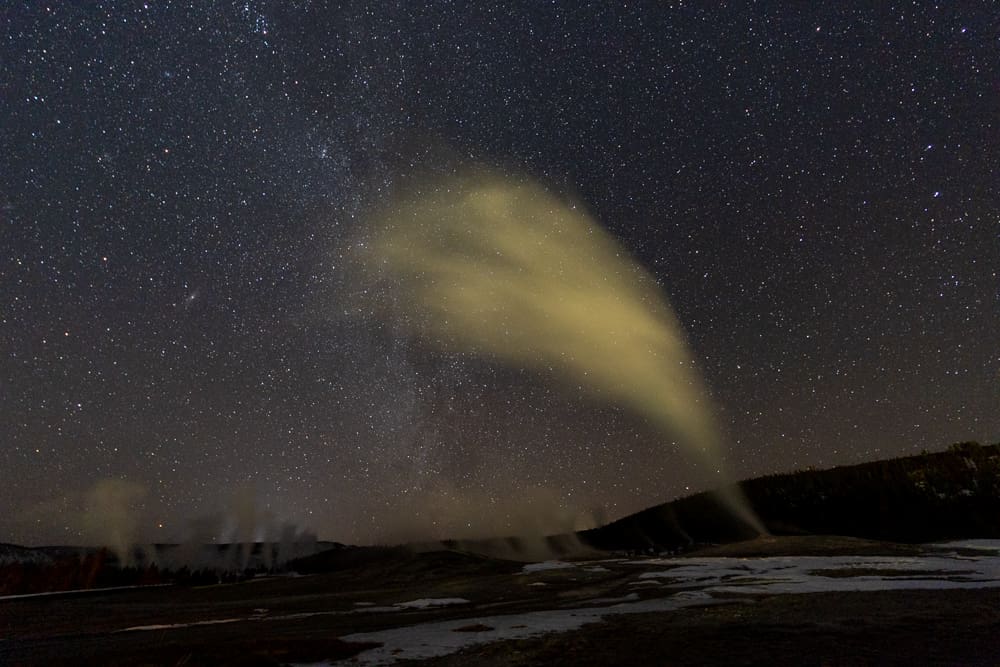
Canon R5 Mark II, RF 14-35MM f/4 @ 14mm | F/4 | 30 SEC | ISO 4000
Working in the Cold
Winter photography comes with challenges, but they’re manageable with preparation.
Yellowstone sits at an average elevation of about 8,000 feet (2,400 meters), where winter temperatures vary dramatically. I’ve experienced relatively mild days in the 40s °F (4–10°C) and brutally cold winds dropping temperatures to –35°F (–37°C).
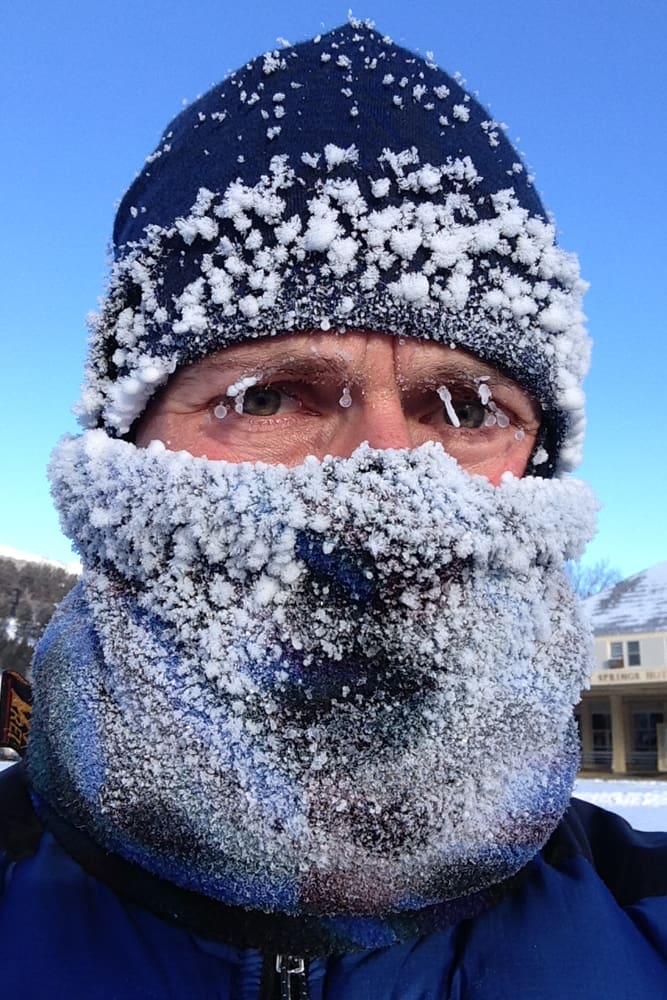
Self portrait after working the morning light at the Mammoth hot springs in a temperature of -20ºF
Dress for standing still. Photographers spend long periods waiting for light or wildlife, so proper layering is essential: thermals, insulating layers, down, fleece, and wind-blocking outer shells. Waterproof clothing can also be helpful when kneeling or sitting in snow.
Modern cameras generally handle cold temperatures well, but batteries drain faster. Always carry spares.
A small towel can help wipe snow or moisture from gear, and care should be taken when changing lenses in blowing snow.
When moving between warm buildings and the cold outdoors, keep your camera inside a padded bag so it transitions slowly between temperatures. Condensation is the biggest risk when bringing very cold equipment indoors, so letting the gear warm gradually inside a closed bag for 30–60 minutes helps prevent moisture from forming on electronics and glass.
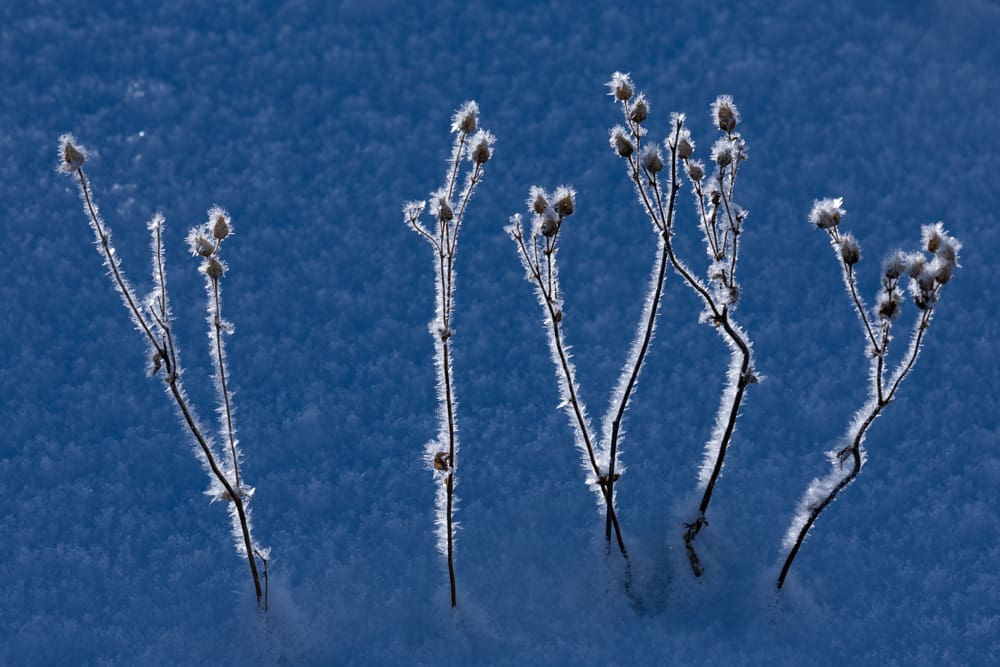
Canon EOS R1, RF 100-300MM f/2.8 L IS USM @ 260mm | F/16 | 1/200 SEC | ISO 100
A Special Experience
Yellowstone in summer is spectacular and well worth experiencing—just be prepared for crowds.
Visit in winter, however, and you become part of the 3% of visitors who see the park during its quietest season. Travel all the way to Old Faithful and you join an even smaller 1% club.
With fresh snow absorbing sound, the absence of cars, and the near-complete lack of crowds, the park feels remarkably similar to how early explorers might have experienced it. The geothermal features, wildlife, and vast landscapes remain exactly as they inspired the idea of the world’s first national park.
Yellowstone in winter isn’t the easiest trip to plan, and it isn’t for everyone.
But that challenge is part of what makes it so special.
Become part of John’s inner circle
Sign up for the newsletter here — it’s free.
Want to become a better photographer?
Check out John’s selection of photography and camera classes here.