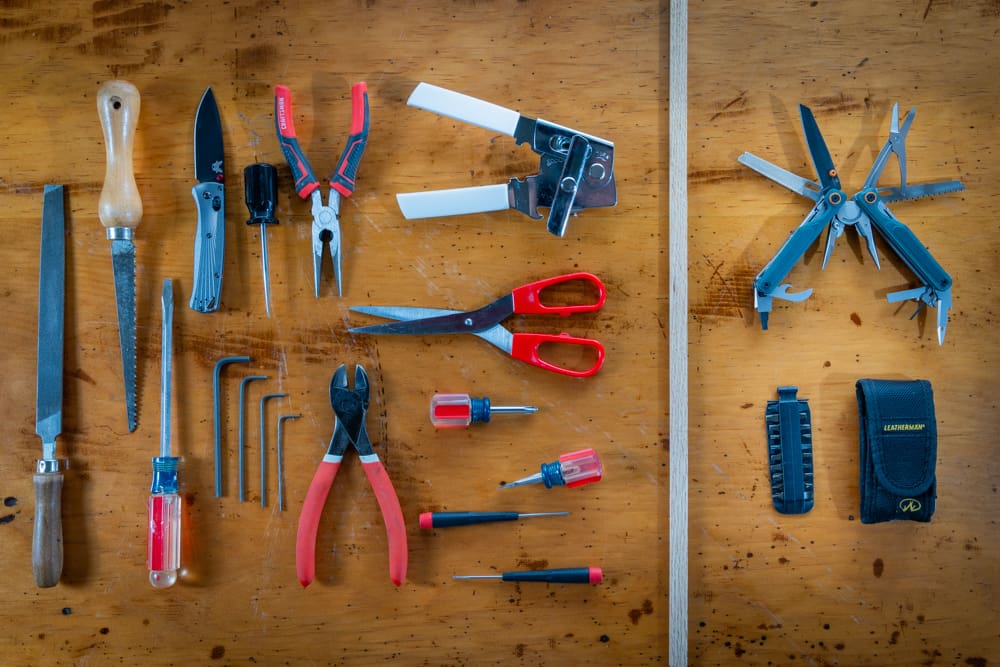
One of my favorite photographic accessories doesn’t come from the world of photography—it’s a multitool. Photography is often about problem-solving, and when time, space, and weight are limited, a multitool is one of the best solutions. Wherever I go with my camera—from the local park to Timbuktu—you can be sure I have one with me.
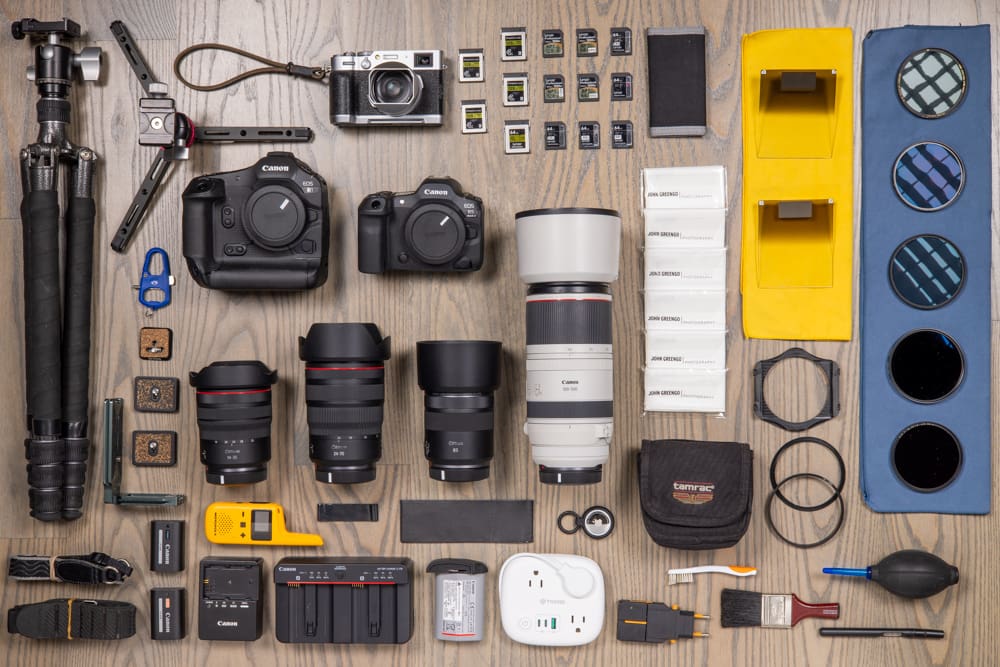
A photographer’s bag is typically filled with core tools like cameras and lenses. With little space left over, a multitool becomes a compact, versatile option for handling a wide range of problems. If you’re working in a studio, you might have the luxury of a full toolbox. But for photographers on the move, a multitool is one of the most valuable small items you can carry.
The multitool market has exploded in recent years. Legendary brands like Victorinox and Leatherman now face competition from niche innovators and budget-friendly copycats. The best multitool for you depends on your budget, preferred toolset, size, and specific needs.
My First Multitools
As a young boy, I was given my first Swiss Army Knife—more precisely, a Victorinox Tinker Small. “Swiss Army Knife” isn’t a brand but a style, and Victorinox is one of the companies behind it.
That compact red knife included a 2” (52mm) large blade, a 1.3” (34mm) smaller blade, bottle and can openers, a Phillips screwdriver, an awl, plus the classic toothpick and tweezers. It was a gift from my dad—a man who could always be relied upon to have a knife on him. If anyone in the family needed one, they didn’t ask for a knife—they called for dad.
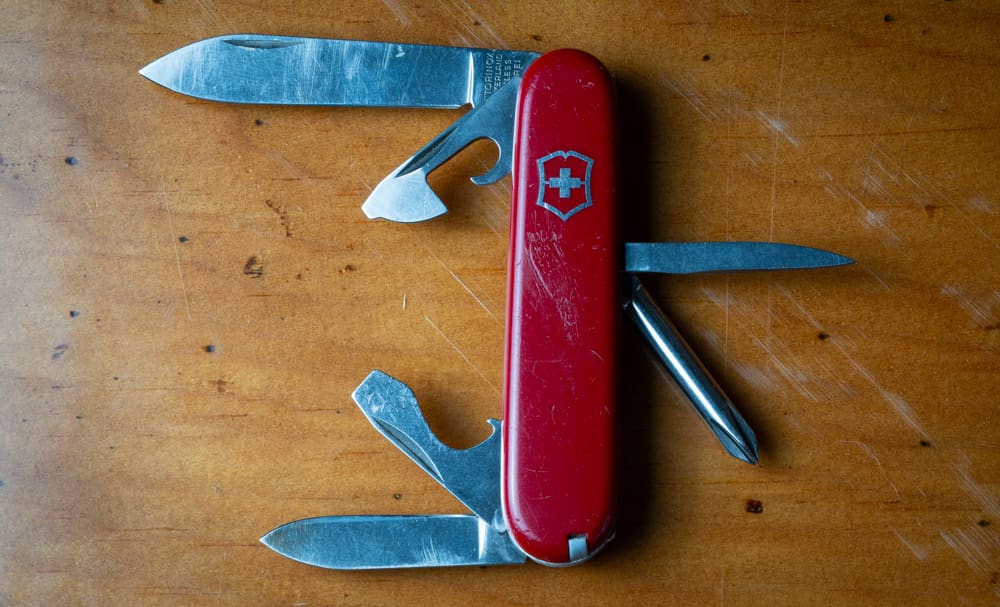
Victorinox Tinker Small
That little Tinker was both a best friend and, at times, a dangerous enemy. One ill-fated whittling attempt as a kid ended with a sliced thumb, a trip to emergency care, and a lifelong reminder every time I trim my nails.
Years later, preparing for a bicycle tour across Iceland, I picked up a Leatherman PST. I used it daily—sometimes for simple tasks like opening cans, other times for fixing my bike or tripod. To this day, Leatherman remains my favorite brand, and I still own that original PST, as well as that Victorinox which still maintains a very sharp blade.
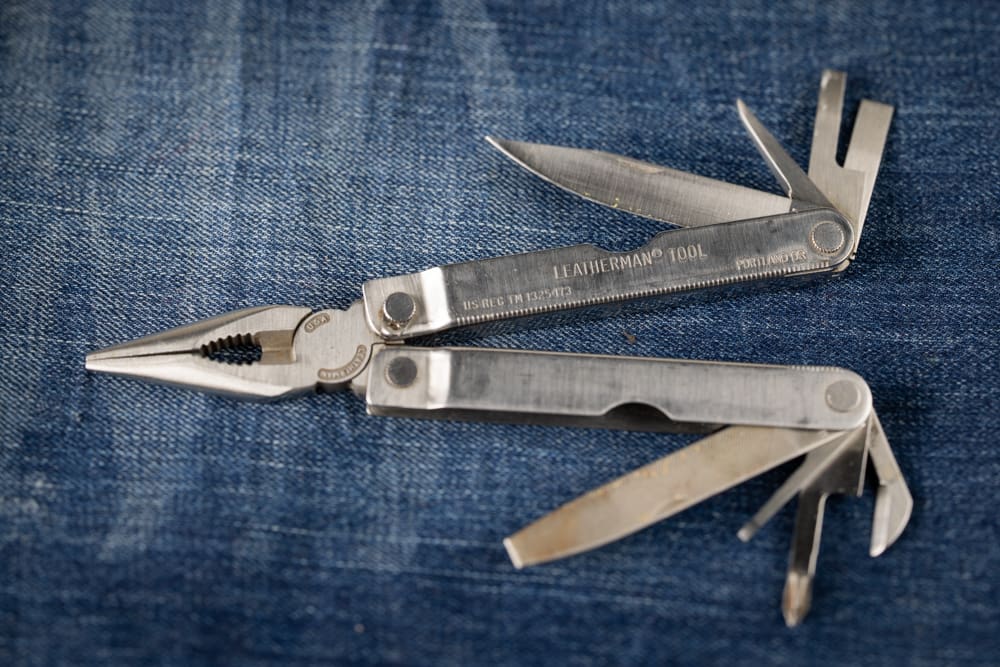
Leatherman PST (Personal Safety Tool)
A Brief History of Multitools
Any hand tool that can perform multiple functions can fit into the multitool category. Tools that can perform a number of functions have been around for almost as long as hand tools themselves. One of the most popular classic variations of the multitool is the Swiss Army style pocket knife.
More than 140 years ago, Victorinox began producing pocket knives for the Swiss Army. These compact tools combined a blade, can opener, and tools for maintaining rifles. During WWII, American soldiers discovered them and brought them home, launching their global popularity. Today, it is said that Victorinox sells more knives than all other knife manufacturers combined.
The modern plier-based multitool came later. Tim Leatherman conceived the idea during a European trip when his car kept breaking down and his pocket knife wasn’t enough. He spent three years designing and obtaining a patent for it, only to spend the next three years getting rejection letters. His concept finally took off—eventually forming the Leatherman company.
Today’s multitools commonly include knives, pliers, scissors, files, saws, screwdrivers, and increasingly, interchangeable bit drivers.
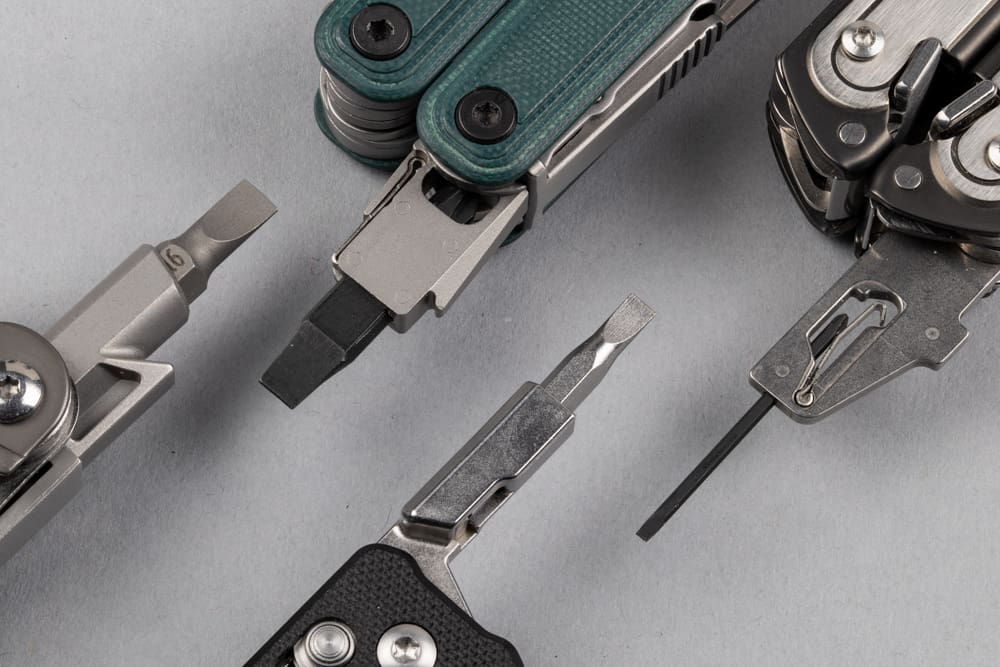
Replaceable bits (L to R): 1/4 inch, Leatherman flat bits, 4mm, Leatherman micro-bit
The first multitool to popularize the replaceable bit driver is the Leatherman Wave, introduced in 1998. The patent for that device recently expired and we are now seeing a surge of clones on the market. The multitool market is bursting with little known companies selling either similar to or slight variations of the Wave. As for the knockoffs and variations, there are a lot of pro and cons to what they offer.
Along with Leatherman and Victorinox the other long-time favorites in this industry are Gerber and Sog. These are companies that have been around for several years and have a good reputation. There are many more smaller companies developing a wide array of niche products hoping to be the next Victorinox or Leatherman. Hop onto YouTube or Amazon and start searching for multitools and you’ll soon be lost in a sea of variations.
Why Photographers Need a Multitool
For photographers, multitools serve two main purposes: camera-related tasks and everyday problem-solving.
The most common need? Tightening and adjusting gear.
Tripods, quick-release plates, cages, gimbals, and drones all rely on screws and bolts. These need to be secure to ensure stability and sharp images. While some can be tightened by hand, a proper tool makes a big difference.
Some tripods and related mounting systems have ways to tighten nuts with fingers, but the problem is that fingers can’t tighten nuts as tight as you might want them. A quality screwdriver is the quickest and best way to tighten a fastener.
Phillips and slotted screws are popular around the home. Those traditional styles are fine for single use, but for screws that are used repeatedly, the six-sided hex or Allen-style are much more durable. Many tripod mounting systems, for camera and lens plates use the Hex or Allen key system. A variety of sizes may be used but many tripod plates and camera braces use a 4mm hex, which happens to be very close to 5/32 in the imperial system.
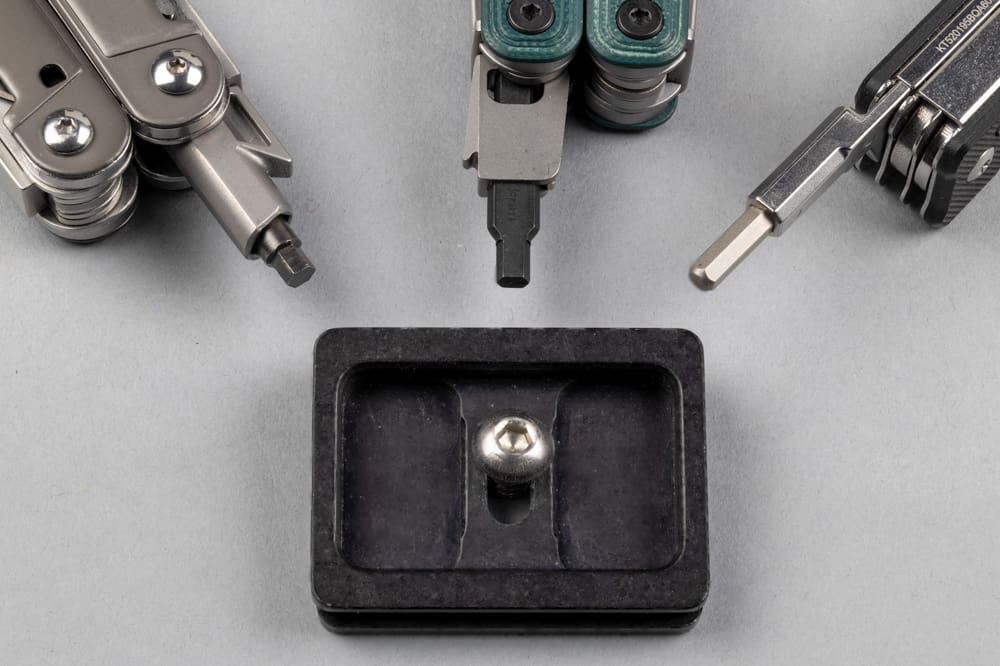
A 4mm Hex or Allen screw on the bottom of the quick release plate can be tightened with a 4mm bit attached to a multitool
For any photographer working with gaffer or duck tape, a quality knife or pair of scissors can make life a lot easier. A large flat-head driver can also be used as a prying device. There’s no end to the types of tools that you might find on a multitool and how they might help you solve a photography-related problem in the field.
The Most Valuable Tool
Tightening or loosening screws is easily my most frequent need. While some camera accessories might feature slotted or Phillips style screws, most good quality mounting systems will use the hex bits. Hex bolts can come in a variety of sizes (2.5mm, 3mm, 4mm, 5mm and so forth). A multitool that features interchangeable bits will allow you to be ready for any device that you might have.
One of the most common types of interchangeable hex bits is known as the 1/4 inch size. This 1/4 inch measurement is for the mounting system on the tool. The measurements mentioned above—like 4mm—is the size that fit the fasteners. Don’t ask me why we are using Imperial measurements for the tool mounting and metric measurement for the fastener end. It’s a long and complicated story.
This 1/4 inch mounting system is already a standard in the power tool industry. Head to any good hardware store and take a look at all the hex bit kits designed for power drills. Many of those bits can be used in a multitool that feature a 1/4 inch bit driver. Be aware that there are different bit lengths as well as variations on how the bits are held in place — some use magnets, others use ball detents and others use just plain old friction.
Leatherman created their own “flat” version of the 1/4 inch bits that allow for the bit holder to be smaller in size. The flat bits will frequently work in standard 1/4 inch bit holders, but the reverse is not true. The Leatherman flat bits are a bit more expensive and harder to find, however there is an increasing number of companies using this system and selling individual flat bits.
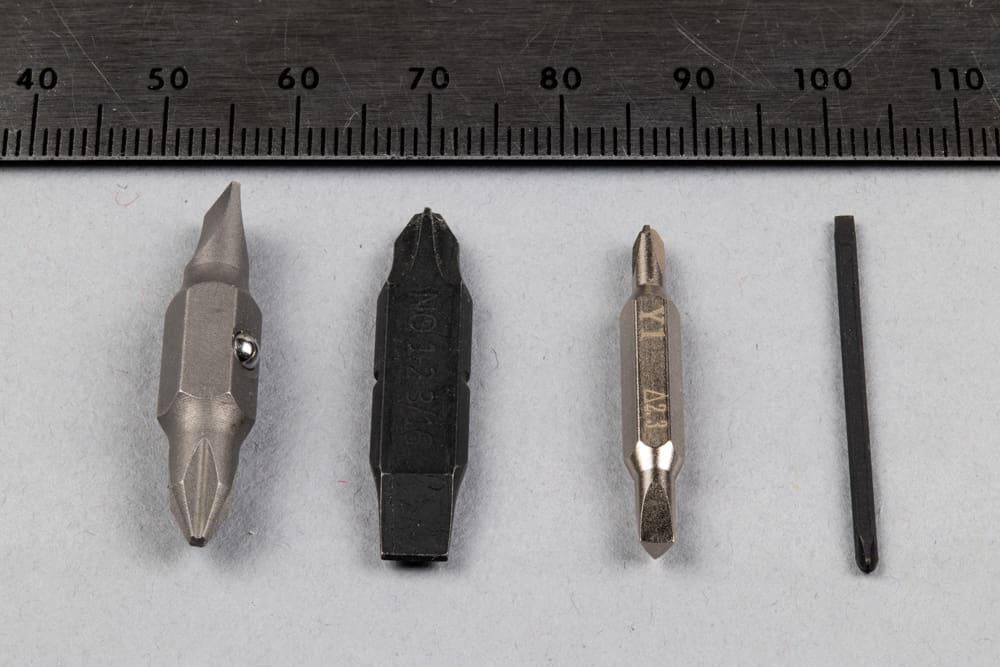
Replaceable bits (L to R): 1/4 inch, Leatherman flat bits, 4mm, Leatherman micro-bit. Notice all of these bits are two sided allowing two different fittings for each bit.
Another popular bit driver size is 4mm, the small size allows it to be included in smaller multitools. These are less common and also made in different styles. You’ll likely need to stay with the same manufacturer for both the tool and bits for them to work well together.
Tool recommendations
Knife
A sharp blade is one of the most popular and important tools for general purposes but for photography it’s more of a secondary tool. Knives have many qualities and aspects to consider, much of which is beyond the scope of this article, but following are some points to consider.
The length, shape, and composition of the blade determine a lot when it comes to the purpose and capability. For general use, a drop point shape with an easy-to-sharpen edge will do quite well for most photographers. Toughness, edge retention, and corrosion resistance are the three most important factors in the steel used. There is no perfect mix for all knives, it depends on the intended uses for the blade. Many multitools are now featuring “super” steels that have improved compounds that are of higher quality in one or more of those three categories.
As a multitool user I like an easy one-handed opening blade with a locking position, but be aware that this may affect the tool’s legal status. The legality of a knife can depend on the blade length, method of deployment, and the ability to lock it into position. Check local laws, or where you will be traveling to, to be sure you’re not going to get yourself into trouble. Of course anything with a blade, like most multitools have, are not allowed in the passenger cabin of an airplane. Any multitool with a blade or other cutting surface will need to be transported in your checked luggage.
Bit Driver
Removable bits, as described above, are a highly desirable feature to have. Be mindful of what bits you’ll need and how you’ll carry them. Many tools allow for a single 2-sided bit to be used. Should you need more than the two tips on that one bit, you’ll need to carry extras with you, perhaps in a holder or in a sheath. Some tools allow for additional bits to be carried with the tool itself so that they’re always available. Check to see that the stored bits are fastened securely enough to meet your expected needs when handling the tool.
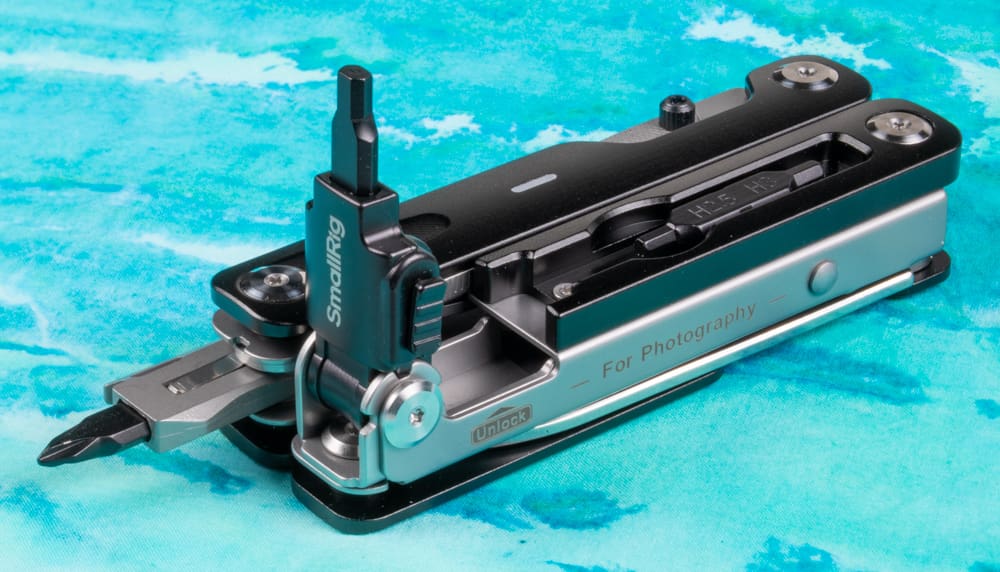
The SmallRig EDC Multi-Tool features two bit drivers with room to store a third bit on the tool itself
Quarter inch bits (on the mounting side) are common but they are also bulky. Leatherman’s flat bit style are a bit more money and are more challenging to purchase in person. The 4mm bits are not as strong and are even less common. While individual bits are available in some locations they will frequently be available in kits with a variety of styles and sizes.
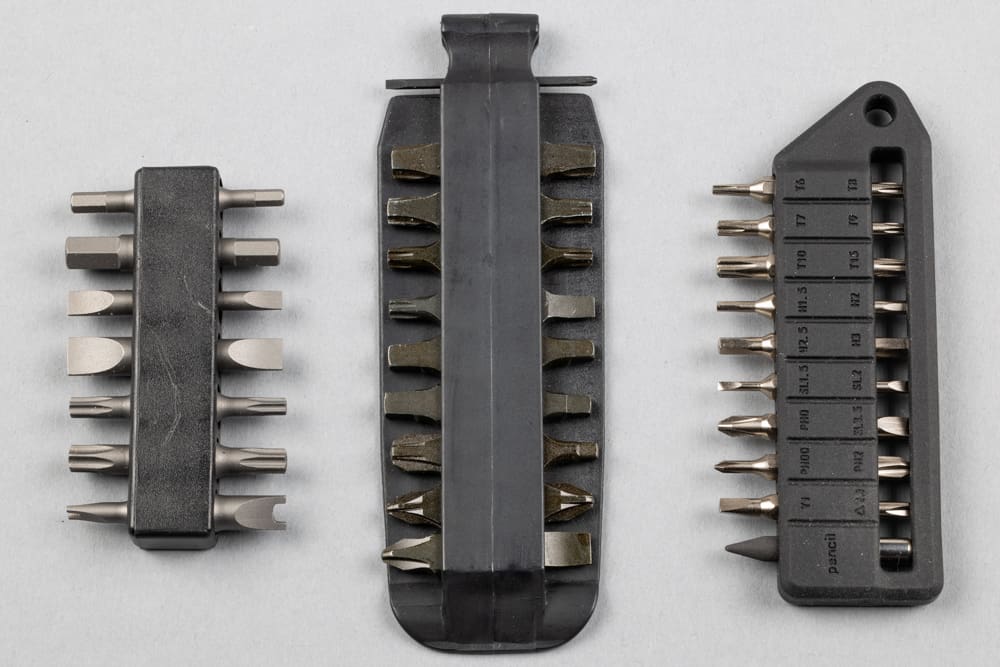
Bit kits for (L to R) 1/4 in., Leatherman flat bits, 4mm
Scissors
A quality pair of scissors is one of my favorite and most used features on a multitool. Two characteristics of good scissors is the ability to cut thick items like paracord (small rope) and precision cuts with small items like thread. Victorinox scissors are renowned in the industry for their quality and versatility and Leatherman is not far behind in my opinion. Being able to deploy the scissors without opening the tool is a benefit if you use them on a regular basis. Be warned — many cheaper multitools feature poor scissor quality.
Pliers
Choosing whether you need pliers is one of the most important first decisions in picking a multitool. Inclusion of pliers dramatically changes the design and size of the multitool. The size, strength, and versatility of the pliers are an important first check. Some offer replaceable wire cutting blades, which are handy if you use that aspect of the pliers.
File
File surfaces can be used for many purposes: wood, metal, or for personal grooming. Size and shape are of course important but so is the file surface itself. Cross-cut grooves might be good for filing an edge of some wood, while a diamond coated file will be good with metal or fingernails.
Screw driver
A standard flathead or Phillips screwdriver is always handy to have with you. Consider what size screw heads you will most likely encounter as different multitools have drivers of different sizes.
The replaceable bit drivers described above are very handy when you’ll encounter a variety of screw heads. All three systems, (1/4 inch hex, Leatherman flat bits, and 4mm hex) have a wide variety of common screw driver options available.
Can/bottle opener
Not necessary for most photographic tasks but possibly more handy at break time. Can and bottle openers are pretty standard on most multitools.
Saw
The small saw may be useful for a camper or hiker and it’s featured on multitools targeted to outdoor enthusiasts. I’ve used the saw while out photographing to cut back blueberry bushes, allowing me to move down seldom traveled trails. One of the less important tools for the photographers in my opinion, but could make you the hero should you find yourself with friends, a campfire, and marshmallows.
Awl
A sharp, pokey little spike intended for starting holes or sewing with thick fabrics might also be helpful anytime you need a strong fine point. The sharp point, frequently accompanied by a long sharp edge can be used instead of the knife blade for a number of tasks like cleaning corrosion out of a battery compartment.
My recommendations
I’m not affiliated with any of the following companies and I don’t have affiliate links. I’m just a bit of a multitool nerd that likes solutions to problems. While I own many multitools, these are the ones I’d recommend to my photographer friends.
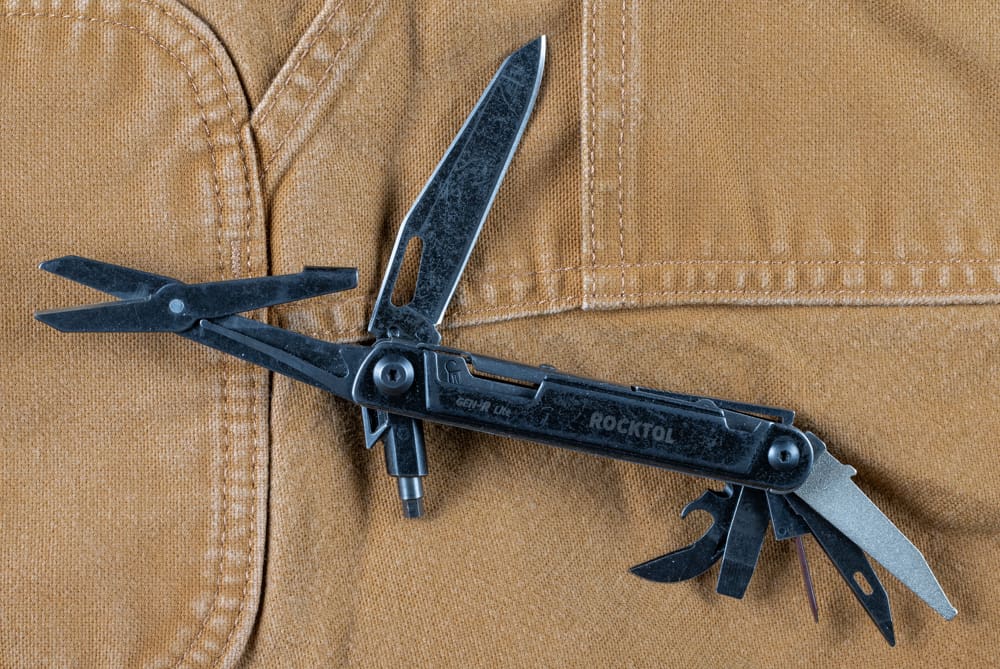
Rocktol Gen-R Lite
Rocktol Gen-R Lite ($25)
I’m blown away by this little tool. It has everything I’d want for most daily photography needs. It’s slim, trim, has a one-handed opening knife blade of good quality, and sizable scissors.
I don’t like the fact that it’s supplied with a glass breaker for it’s replaceable bit, you’ll likely need to purchase separate bits that fit your own needs. It also doesn’t come with a belt clip, but both the clip and the popular 1/4 inch bits can be purchased separately and added to it.
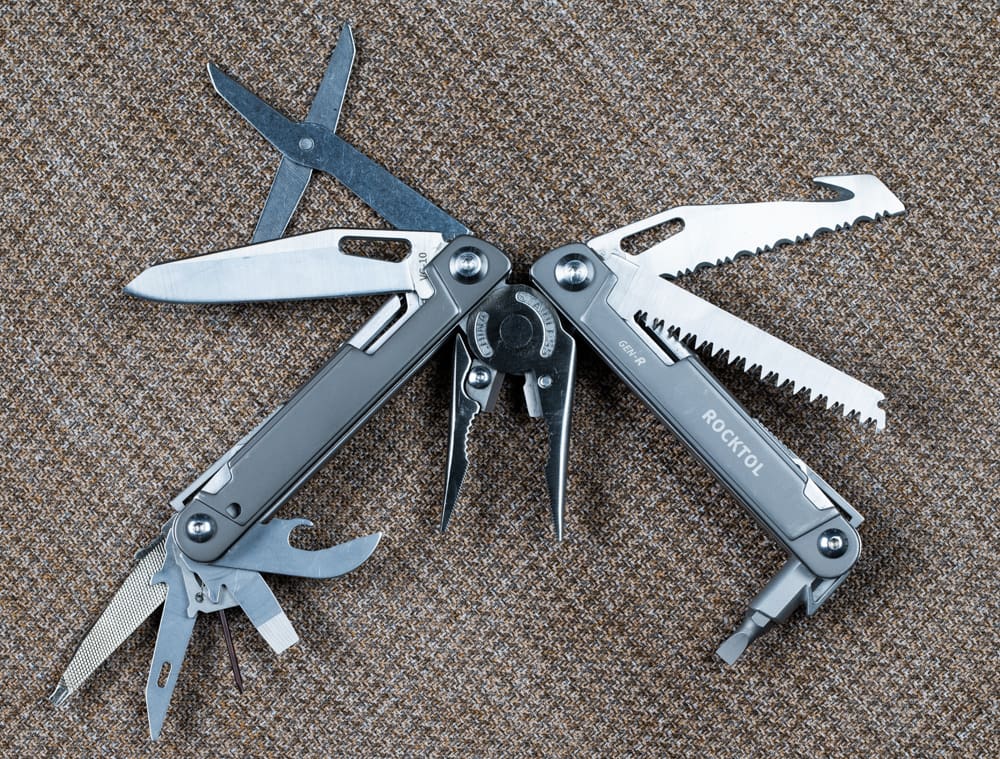
Rocktol Gen-R
Rocktol Gen-R ($35)
Somewhere in China is a factory that is churning out Leatherman look-alike multitools that are then resold to a variety of companies. Each consumer level retail company makes a few changes and sells the knife under a different name. Rocktol is one of the best of these knockoffs in my opinion.
The Gen-R features good quality, fantastic quality if you consider the price, and has a nearly perfect feature set for a plier-based multitool. It has a good quality one handed opening blade, large outside accessible scissors, and a common 1/4 inch bit driver that works with a huge collection of bits. No, it’s not Leatherman quality, but it’s also one quarter the price. Let’s call it very good on quality and excellent on value.
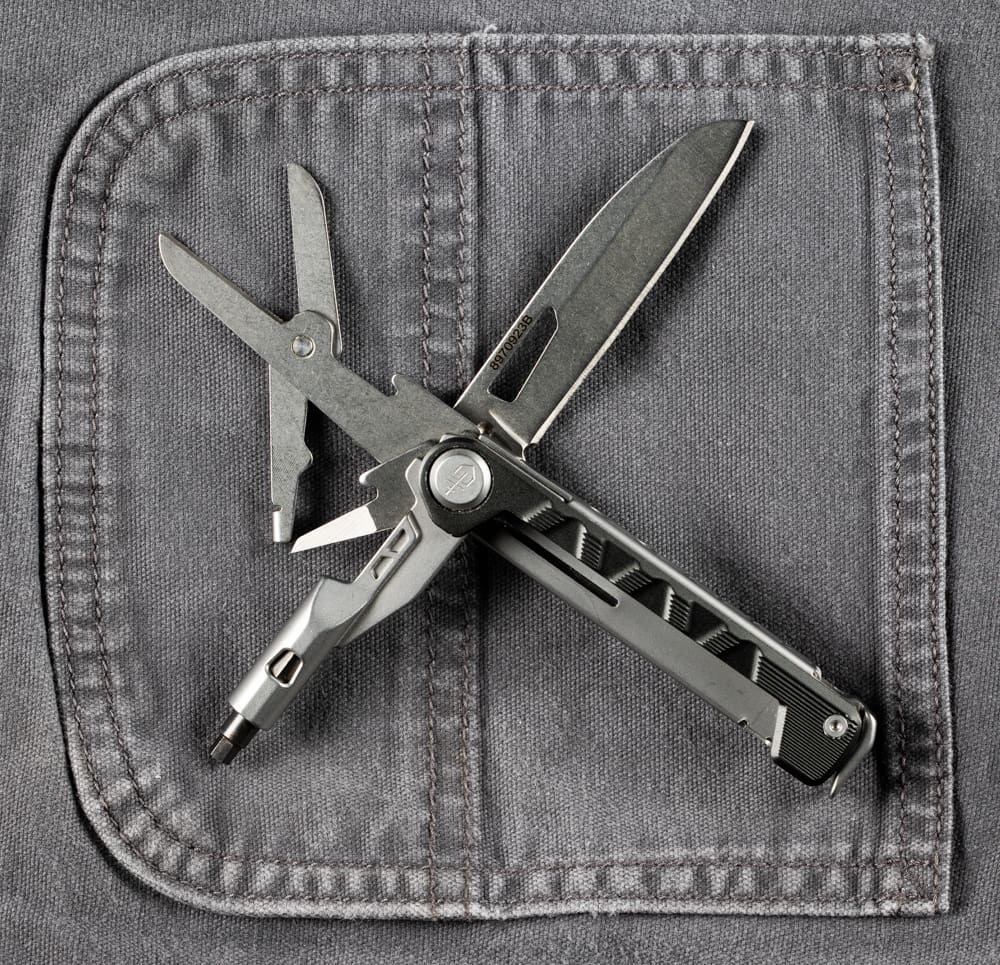
Gerber Armbar drive
Gerber Armbar Drive ($35)
A small and lightweight tool that provides the critical items of a bit driver, knife, and scissors. Gerber makes a lot of tools in the Armbar series but this little one delivers good quality in a small lightweight size. For those that are very interested in a bit driver, this one is very quick and easy to deploy.
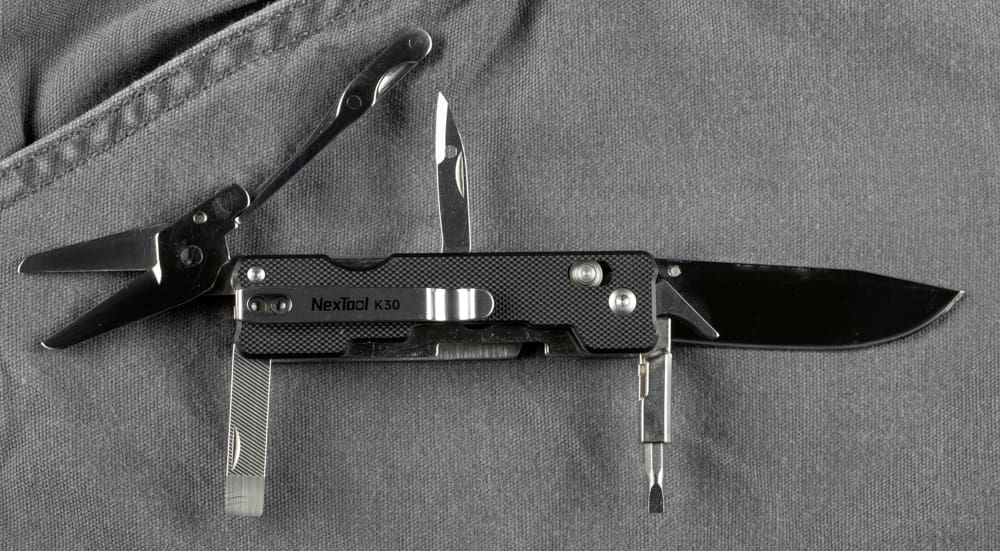
Nextool K30
Nextool K30 ($45)
One of the newest tools on the market looks like a boxy version of the classic Swiss Army Knife. Unlike most Victorinox knives this one has an easy, one-handed deployable blade which is also locking. It features a locking 4mm bit driver and one of the largest and best quality scissors I’ve seen in a tool this small. Purchase the extra bits for $5 more and you’ll greatly increase the versatility.
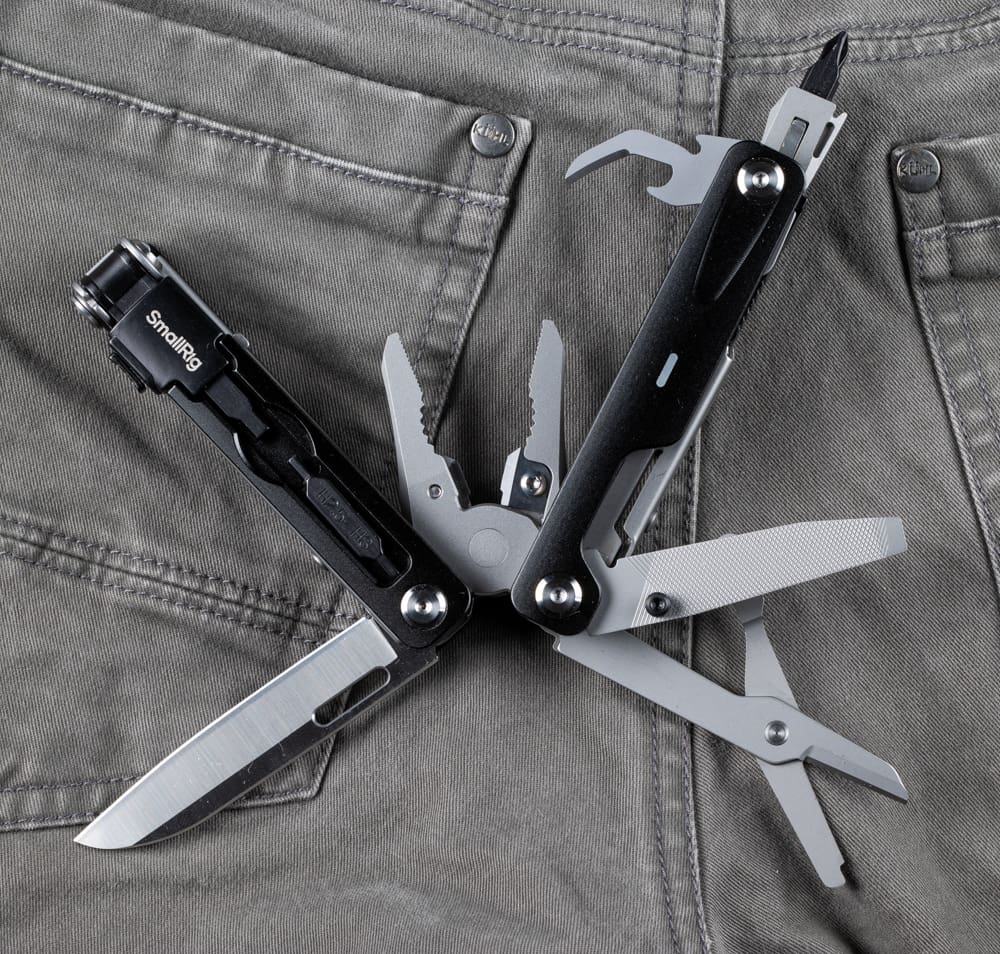
SmallRig EDC
SmallRig EDC Multi-tool ($60)
This is the only multitool I’ve seen specifically targeted at photographers and cinematographers. This makes sense as it’s the only tool of its type being sold by a photography-related company. The unique benefit with this tool is an outside deployable bit driver along with a second driver on the inside. To top it off, a third bit is included and attached via magnets to the tool.
This core tool design looks to be coming out of China and being sold under a variety of names like Dakoyu and Mossy Oak. The Small Rig version sells for more, likely because it’s been modified to feature the outside bit driver and bit storage. It’s a bit clunkier than many of the other tools mentioned here, both heavier and larger. I’ve included it here more for reference than strong endorsement.
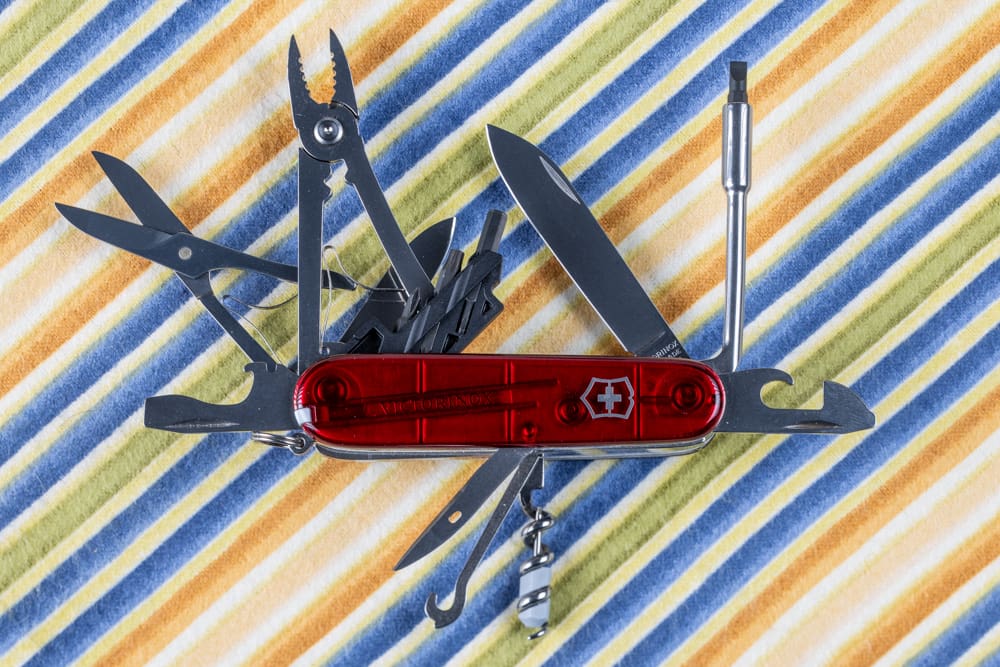
Victorinox Cybertool – Medium
Victorinox Cybertool – Medium ($100)
The famous Swiss Army Knife maker, Victorinox, created a series of Cybertools featuring an interchangeable bit driver back in the early 2000’s. These are not as common today but a few of the models can still be found if you look in the right places.
A fun feature of the Cybertools is that, not only does it carry a double-sided bit in the bit holder, but it includes a bit holder for 3 additional bits to be stored in the knife. This gives you a total of 4 double-sided bits. The 4mm double-ended ball-detent bits are not as easy to find, and don’t have as many optional variations available.
Several versions of the Cybertool were made but the Medium might be my favorite for throwing in the camera bag. The big benefit to the Victorinox is that they are very comfortable in the hand, meet legal laws in most locations and offer the finest precision scissors on the market.
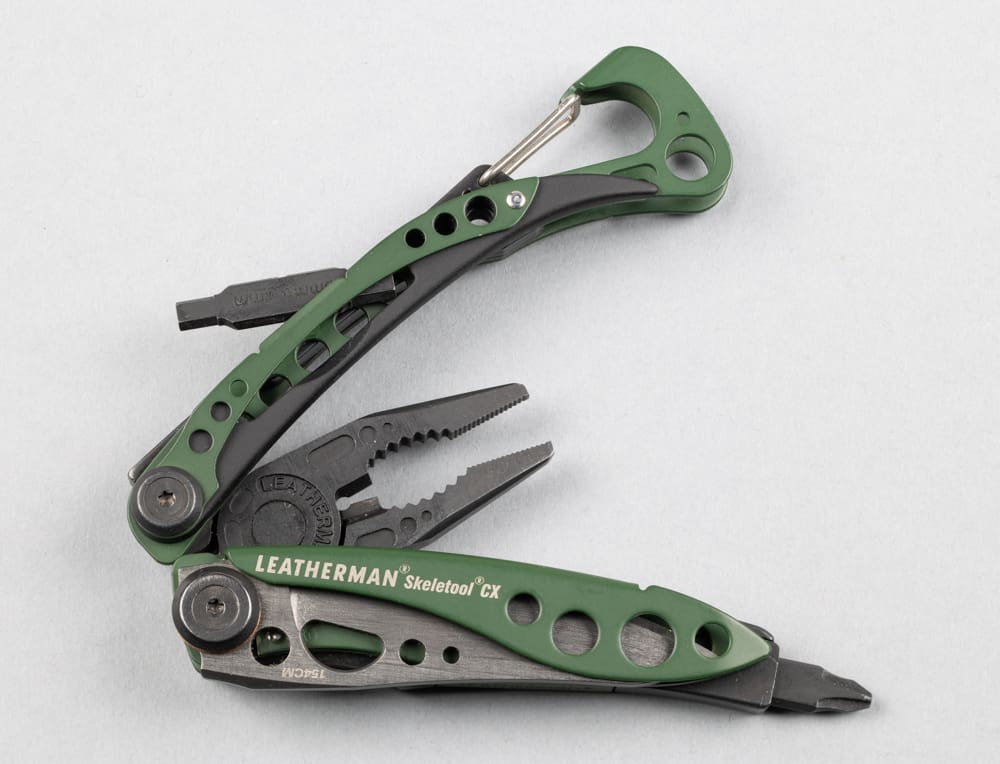
Leatherman Skeletool CX
Leatherman Skeletool CX ($100)
This multitool is one of only a few options where a secondary bit can be stored onboard. This can be handy if you want to carry a back-up bit, or want a standard Phillips and slotted drive to go along with a double-sided hex bit option.
Minimal extra features are included on this plier-based tool; you get just a knife and bottle opener, along with the bit driver. For a plier-based tool it’s very lightweight, thanks to the minimal tool set and skeletonized body from which it gets its name. Like all Leathermans, it uses their flat bit system.
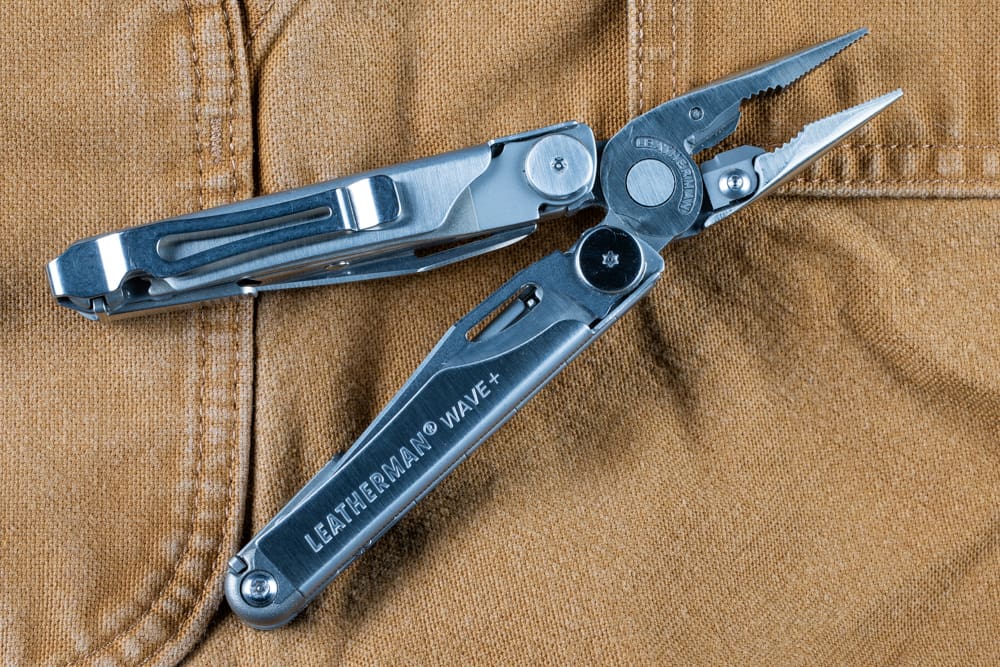
Leatherman Wave+ (3rd generation)
Leatherman Wave + and Wave Alpha ($130-200)
The most popular tool from the most popular multitool company is the Leatherman Wave. This tool has undergone several iterations and is currently available as either the Wave+ (3rd generation) or the Wave Alpha (4th generation).
Leatherman tools sell for more than other brands partly due to much of the manufacturing being done in the USA and for the fact that they offer a 25 year warranty. I still have and use my original PST that I got more than 30 years ago. I purchased the original Wave (gen. 1) that had some mobility issues after much use. I sent it in to be repaired and it was replaced by a brand new next generation model.
The Wave is a legendary name in the world of multitools. Nit pickers and knife reviewers will complain about a number of small or personal issues, but it’s been a big winner industrywide.
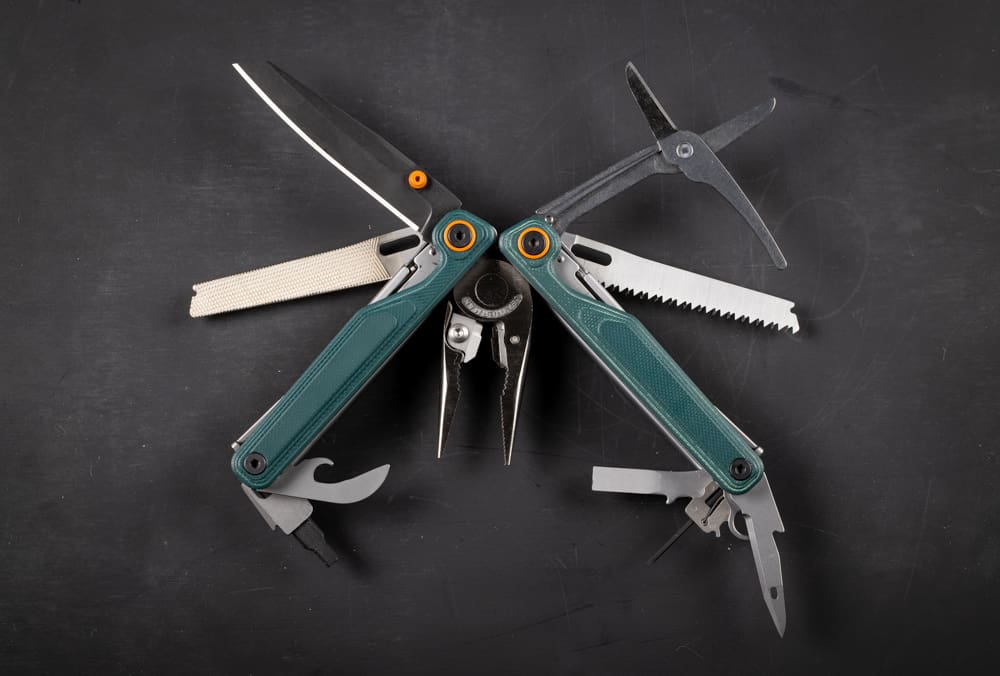
Leatherman Wave Alpha (4th generation)
The Wave Alpha (4th gen) was designed around customer feedback on the previous wave model. The new Alpha features a super-steel blade made of Magnacut that is stronger and offers better edge retention. Scissors have been improved, enlarged, and moved to the outside of the tool set for easier deployment. The metal handle has been changed to G10 — a durable, lightweight fiberglass laminate and epoxy resin that is more comfortable. Whether in your pocket or in your hand, the textured surface and rounded edges make this multitool easier to live and work with.
All Wave variations feature a tool not yet particularly noted — a micro-bit driver. This is a very small, replaceable bit designed for tiny screws on eye glasses or small electronics, like cameras and lenses. The two-sided reversible bit features a flat head on one end and Phillips on the other. I’ve used this micro-bit driver to tighten screws of a loose lens mount.
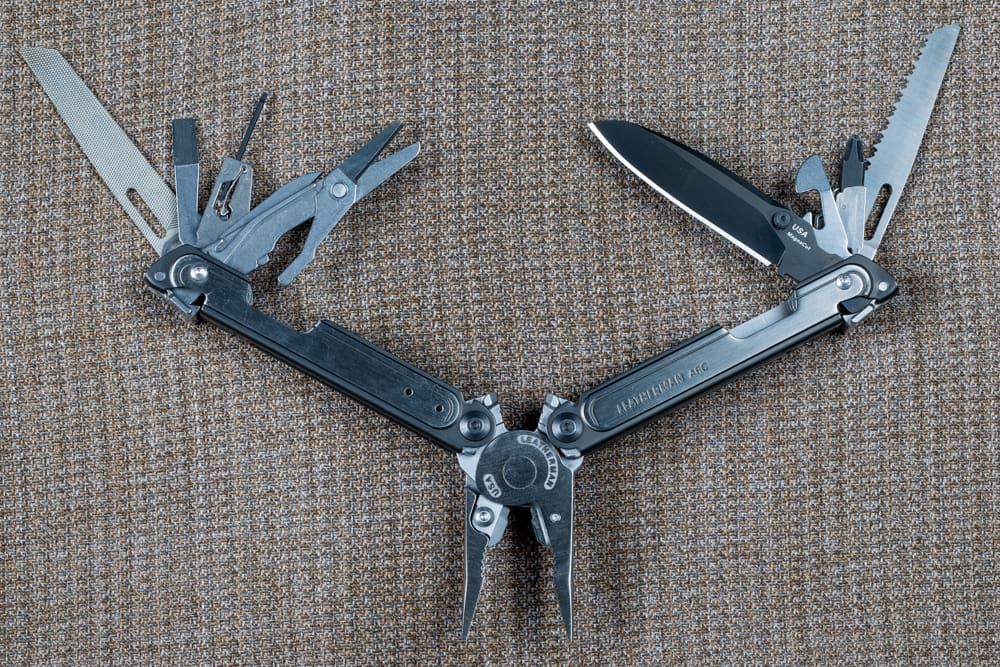
Leatherman Arc
Leatherman Arc ($250)
The pinnacle of multitools for most folks these days is the Leatherman Arc. The Arc is designed around a long-time goal of many multitool users; one handed access to every tool. Thanks to small, but powerful, magnets you can access every tool on the Arc, including the knife blade, pliers, scissors, can opener, saw, awl, bit driver, file, and micro-bit-driver easily with one hand.
The Arc is a springboard in advancement from the Wave and for those that use a multitool on a very regular basis, the easy access is a game changer. However, if your multitool is more of an emergency item, using two hands to access many or most of the tools is not a deal breaker. As wonderful as the Arc is, it will be overkill for many photographers.
Final Thoughts
Choosing a multitool can feel as intimidating as choosing a camera system. There are endless options, and small differences can matter depending on your workflow.
Start simple. A smaller, affordable multitool is often the best entry point. If you upgrade later, your original tool will still find a place in your kitchen, office, or car.
There are plenty, if not an overwhelming number, of YouTube reviews on multitools to help you out. Welcome to the world of EDC (Every Day Carry) where you can see the insane number of items and objects some people must have with them at all times.
Pick any multitool and you’ll find a dozen or more reviews. Be aware, like everything else in life, some people get really hung up on one particular issue and it biases their judgment on everything else (maybe that’s me with the hex bit driver).
Two quality sources of YouTube reviews are from Maxlvledc and KnifeCenter. Both offer plain-spoken reviews based in reality. Both are passionate about multitools and knives and have a deep understanding of the marketplace and the available options.
In the end, the best multitool is the one you actually carry—the one that’s there when something goes wrong and you need a solution fast.
Become part of John’s inner circle
Sign up for the newsletter here — it’s free.
Want to become a better photographer?
Check out John’s selection of photography and camera classes here.