Photographic history is filled with advancements in technology; almost every camera introduced is in some way better than the one that preceded it. With the most recent camera introductions from Canon, Nikon and Sony, targeted toward the mid-range photo enthusiast, I believe we are now entering a high plateau where future advancements and meaningful changes will be minuscule.
I realize that proclaiming that no more meaningful advancements will take place in the future doesn’t stand well in the course of time. The notorious quote from 1899 by the commissioner of the patent office that the office should be shut down because “everything that can be invented has been invented,” is a quaint thought when viewed through the lens of history. As a side note, as fun as this quote is to contemplate, it has no historical evidence to back it up. It’s most likely a significant misquote or complete fabrication.
We all know that technology marches onward, and cameras are no different. I believe cameras will continue to evolve and improve; it’s just that, at this point in time, the improvements from one model to the next are diminishing.
This month marks the release of my Sony A7 V: Complete Camera Guide. This course focuses on Sony’s mid-range do-everything camera that will be joining the Canon R6 Mark III and Nikon Z 6III in the highly competitive enthusiast camera category. These cameras are neither the top nor the bottom of the line; they are the jack of all trades, which is exactly what makes them attractive to a wide range of enthusiasts.
All three of these cameras represent a remarkable advancement of technology. All three are part of large photographic systems that are multiple generations into an evolution of change. All three of these cameras should satisfy the needs of almost every enthusiast, as well as many pros.
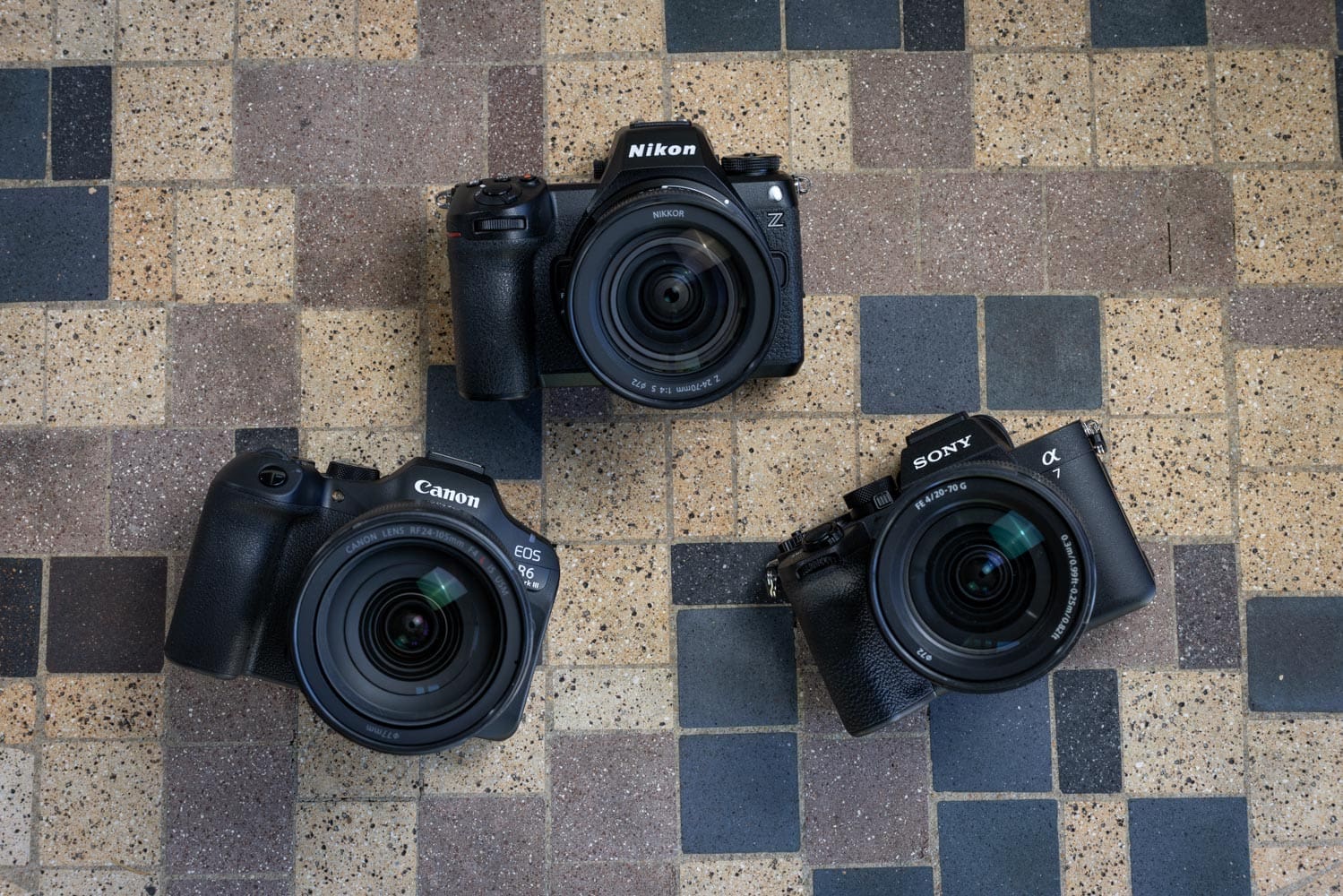
We are about a decade of development into the mirrorless system by these three manufacturers (8 for Nikon and Canon, and 13 for Sony). As their names imply, these are third- or fifth-generation mirrorless models that are based on DSLR and SLR systems which had decades of development. Each of these systems has fully fledged supporting lens systems, so far developed are they that second-generation versions of existing lenses are regularly appearing.
At this stage in the game we are not seeing leaps and bounds of change but rather refinements and modest changes.
What’s Left to Improve?
For a very long time cameras have been compared against each other on the specification sheet. Manufacturers know this and would try to game the system by offering a camera that offers just a bit more when compared on the spec sheet. Whether that feature’s “improvement” made for better photos, improved the photographic experience or meaningfully made for a better camera was beside the point. All that mattered was another bullet point that could be highlighted as why one particular camera was the best.
The focus of comparison has drifted over the years; here are just a few of the spec-war categories: flash sync speed, top shutter speed, number of autofocus points, motor drive rate, megapixels, types and numbers of focus-tracking subjects and dynamic range. To be fair, all of these features are tools that photographers can make use of. It’s just that very few of us are pushing the extremes where a 5% improvement would make a noticeable improvement to our photography. However, each of these specifications represented a potential selling point to a new customer, or even better, someone switching from another system.
Produce a camera with one specification that is fractionally better than the competitor, and that is what defines the advertising campaign. Never mind if the incremental improvement will really make a difference to the final user. Just make everyone realize that one minor improvement “might” be the difference between getting the shot and getting nothing at all.
Nikon Z 6III vs Canon R6 Mark III vs Sony A7 V
The three mid-range cameras from the largest manufacturers are all highly capable image-capture devices. I pity the person just entering the photographic arena trying to decide which one to choose based on the specifications. While there are slight differences, most users won’t find notable advantages of one over the other for general photography.
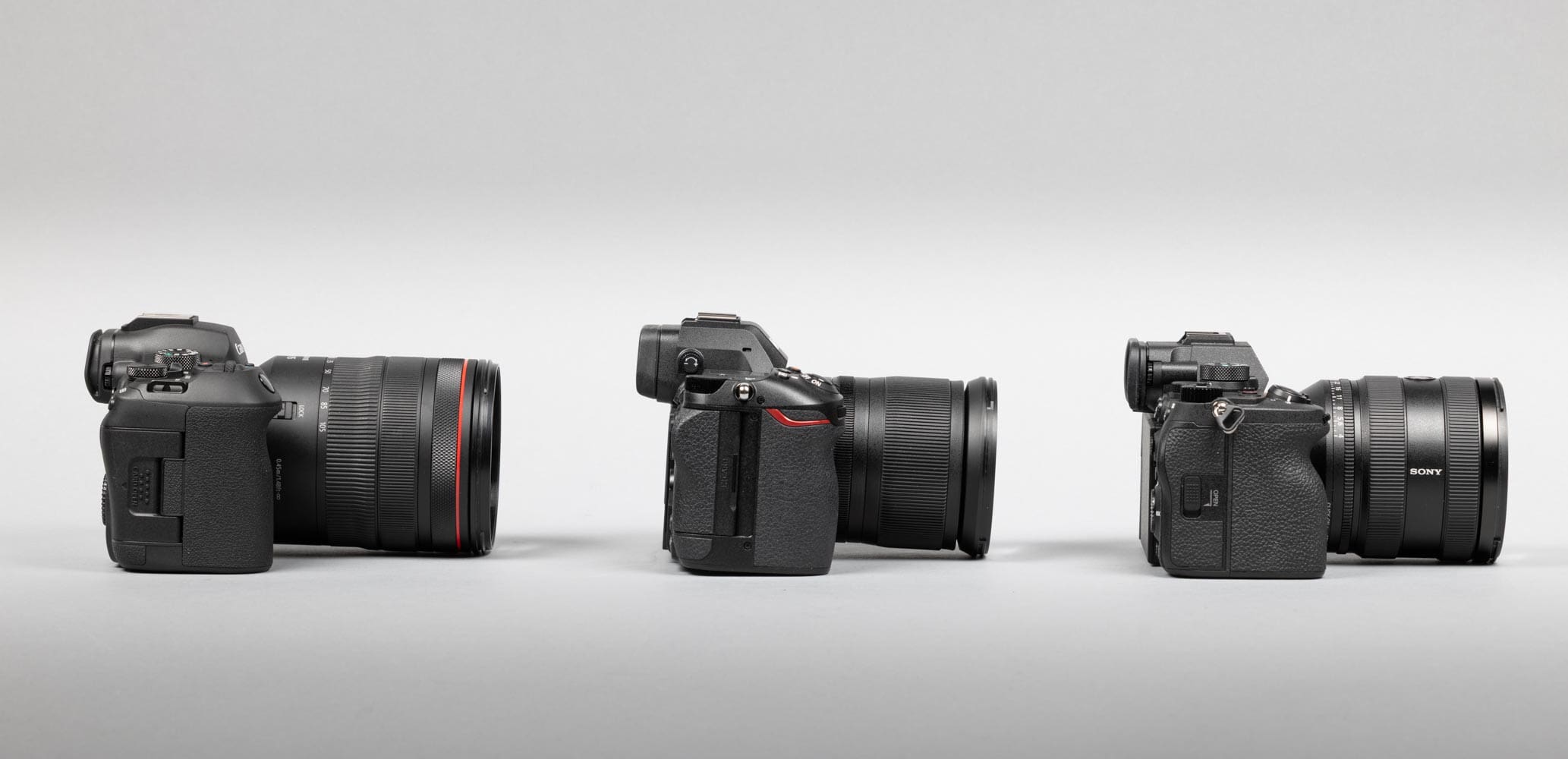
My advice to a newcomer would be to choose the one based on the available lens system and accessories, the feel in the hands, and the general user interface that feels most comfortable to them. All three should return professional-quality results in almost every situation. Of course, if there is a particular area that one camera excels at and is important to you, that might be the make-or-break factor.
Should You Upgrade?
If you own an older generation of the Nikon Z6, Canon R6 or Sony A7 series and are considering “moving up” to the latest offering, the value of doing so can be difficult to gauge. The most obvious reason for upgrading is if your current camera isn’t doing something you need it to do, and the new one can do it. This is rarely the case. It’s far more likely that the latest offering does something a bit better than the older generation.
With most new mirrorless variations, the improvements are small and spread across a wide spectrum of features. As an individual, you’ll likely not need the full range of improvements. Manufacturers, on the other hand, will use the wide variety of improvements to help sell the camera to a wide variety of users.
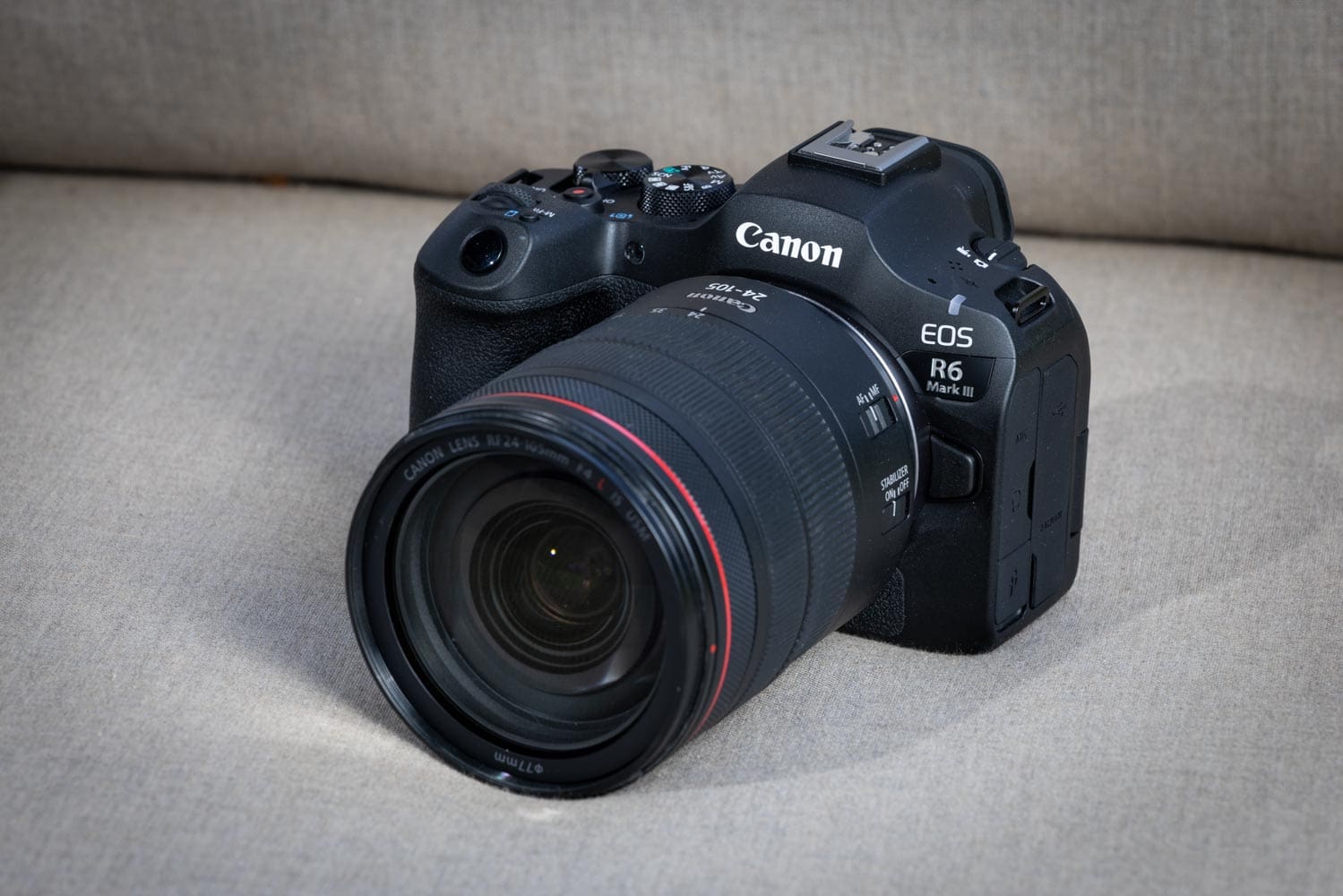
Canon EOS R6 Mark III
Most photographers can easily skip a generation or even two before they see a meaningful difference in features or performance. The cost to upgrade is the X-factor. Everyone has a slightly different cost analysis from which to judge their situation. Setting aside the money factor, one must also consider the learning curve.
Each new camera offers a change in operation and how you interact with it. Yes, a new camera is an exciting prospect, but is going through the learning and adjustment phase something you want to do? One of the conundrums of the new-camera question is that the bigger the improvements and changes to the camera, the more there is to learn and adjust to.
One feature to keep your eye on
If I had to point your attention to one particular feature to pay attention to, it would be the sensor and its electronic shutter scan rate. Most cameras use a mechanical shutter as the default option, with a maximum drive rate of 10–14 fps (frames per second). The optional electronic shutter, however, can achieve drive rates of 20–40 fps; however, there is a very big caveat to this misleading number.
Most electronic shutters capture the image by turning the sensor pixels on and off, in a row-by-row progression. This process is often referred to as rolling shutter or scan rate. The faster the scan, the more accurate a fast-moving subject will look, and the more frames per second that can be captured. Cameras with slow scanning rates will distort fast-moving subjects, sometimes in dramatic ways.
Sony A7R V, FE 100-400mm f/4.5-5.6 GM OSS F/5.6 @ 280mm | 1/4000 SEC | ISO 800
Electronic Shutter
The Sony A7R V is a great camera, but not for fast-action photography while using the electronic shutter.
One of the most disingenuous statistics of the camera industry is the stated continuous shooting rate. Companies claim incredibly fast drive rates of 20 to 120 frames per second. One would think this would be great for all sorts of sports photography. In reality, the only way to achieve these rates is to engage the electronic shutter. When doing so, the speed at which the electronic shutter completes its scan is critical. A slow scan will result in a gross distortion of anything moving in the frame.
A cyclist moving quickly across the frame will have noticeably distorted wheels. A baseball thrown by a pitcher or the swing of the batter will both take on otherworldly shapes, clearly unacceptable for most uses. Fast drive rates are meaningless if you can’t use them to capture fast-moving subjects. Most users would be better off looking at the specification for continuous shooting rates available with the mechanical shutter for a more realistic expectation.
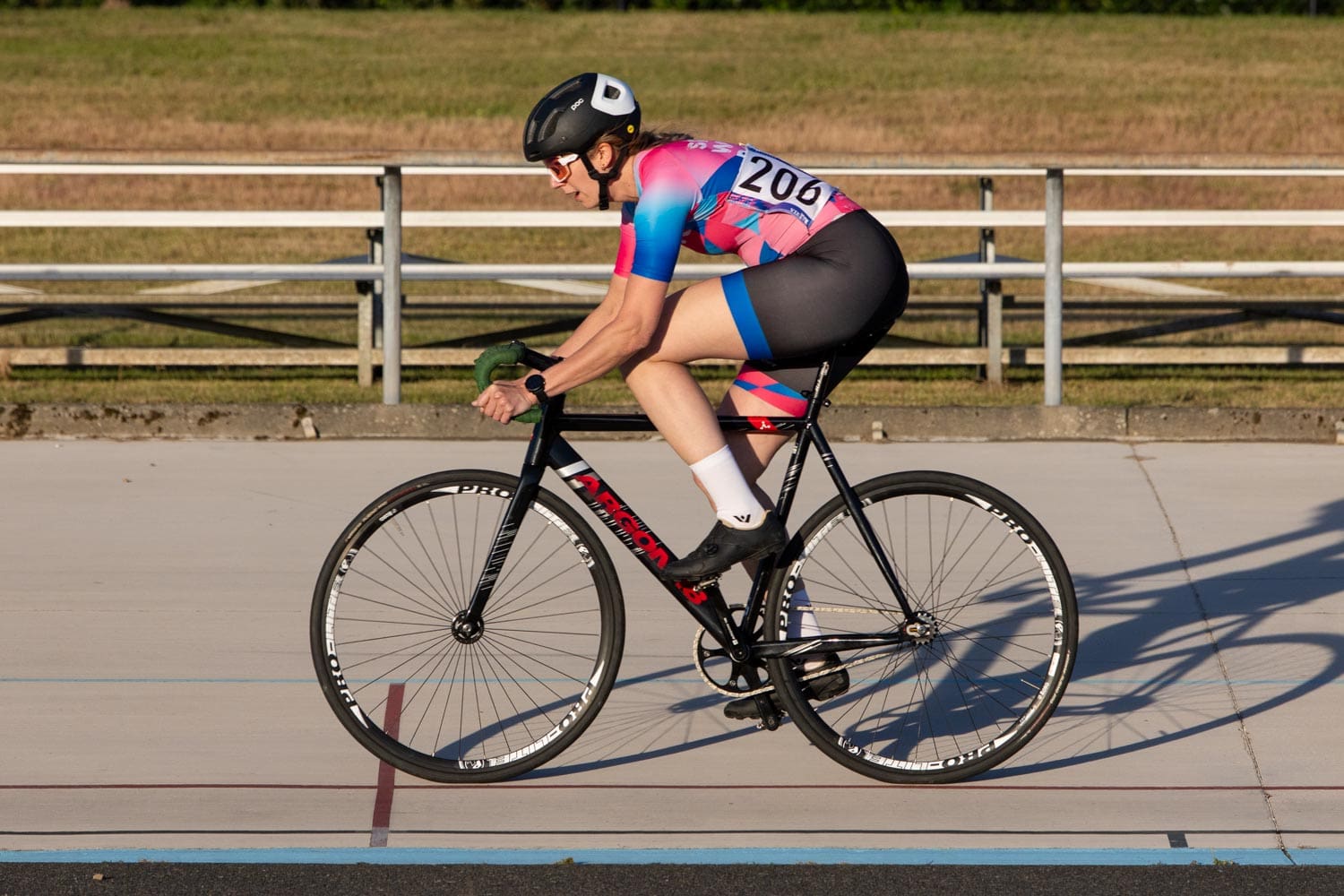
Canon EOS R1, EF 70-200MM f/4L IS USM @ 200mm | F/5.6 | 1/4000 SEC | ISO 800
The Canon R1, with its fast-scanning sensor (2.8 ms / 1/360), allows for fast subjects to be frozen without any visible distortions.
Measuring the scan time requires technical gear I don’t have, so I rely on published data by others. However, I do have my own technique for testing the real-world effect and comparing results. Results are usually measured in milliseconds (1000 ms are in one second), but I frequently also list them in fractional seconds, as they are numbers that photographers are more familiar with.
I split the scanning rates into three categories: fast, medium and slow. Cameras in the fast category can be expected to capture very fast-moving subjects with little to no noticeable distortions. These cameras will work with most professional individual and team sports as well as motor vehicle and bike racing. Medium-speed electronic scanning shutters will start showing distortions with subjects like a fast runner or moderately fast bicyclist. Slow-scanning cameras should only be used with stationary or very slow-moving subjects, like a person walking at a modest pace or an actor in a stage play.
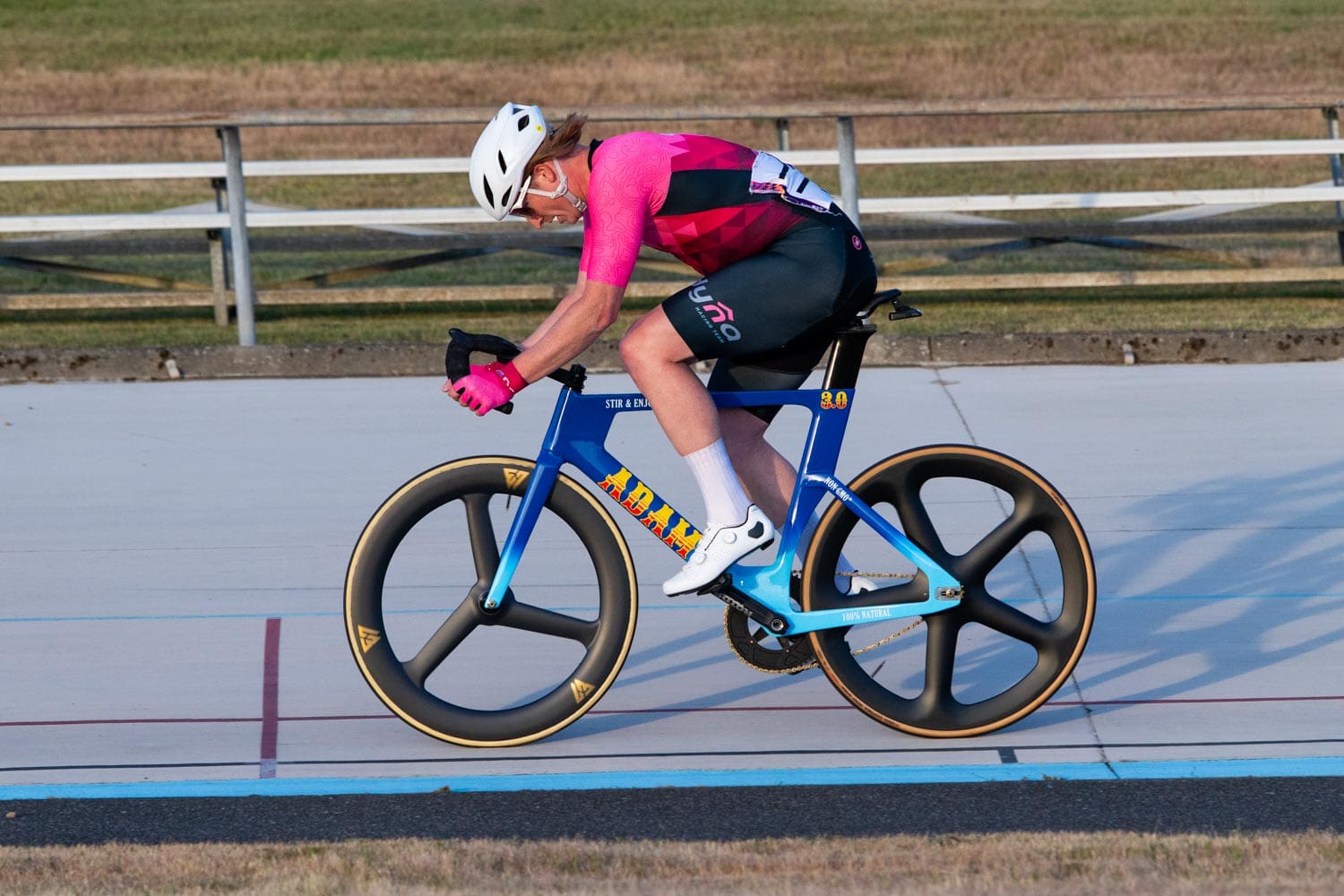
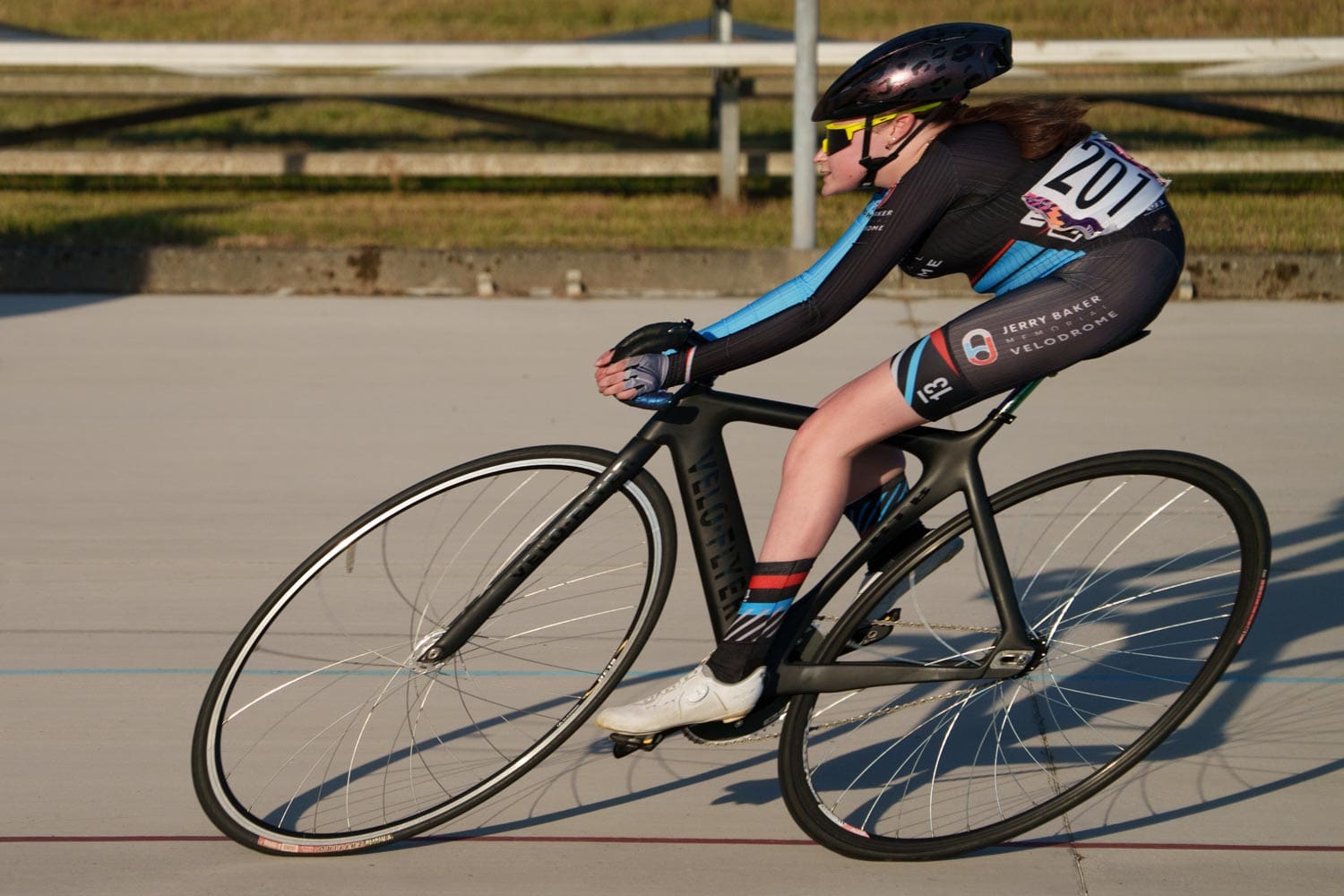
Canon EOS R6 Mark III, EF 70-200MM f/4L IS USM @ 180mm | F/5.6 | 1/2000 SEC | ISO 1600
The Canon R6 Mark III, with a medium-speed scanning sensor, results in slightly tilted vertical lines in this panning shot
Fast electronic shutters: (1 ms to 4 ms or 1/1000 to 1/250 sec.)
- Canon R1: 2.8 ms or 1/360 sec.
- Nikon Z8 & Z9: 3.6 ms or 1/280 sec.
- Sony A1 & A1 II: 3.8 ms or 1/260 sec.
The above cameras are the only ones that fall into my “fast” category.
Medium electronic shutters: (5 ms to 16 ms or 1/200 to 1/60 sec.)
- Canon R3: 5.6 ms or 1/180 sec.
- Canon R5 Mark II: 6.3 ms or 1/160 sec.
- Sony A9 II: 6.5 ms or 1/153 sec.
- Fujifilm X-H2S: 6.7 ms or 1/150 sec.
- OM System OM-1 & OM-1 Mark II: 8 ms or 1/125 sec.
- Canon R6 Mark III: 13.5 ms or 1/74 sec.
- Nikon Z 6III: 14.4 ms or 1/70 sec.
- Sony A7 V: 15.1 ms or 1/66 sec.
The above cameras are just a sample of the ones that fall into the “medium” speed category.
Slow electronic shutters: (20 ms to 100 ms or 1/50 to 1/10 sec.)
- Nikon Z 5II: 66.6 ms or 1/15 sec.
- Sony A7 IV: 70 ms or 1/14 sec.
- Canon R80: ms or 1/12.5 sec.
- Sony A7R V / A7CR: 99.3 ms or 1/10 sec.
The above cameras are just a sample of the ones that fall into the “slow” speed category.
The ultimate solution to this scanning problem (rolling shutter) is a global shutter, which is capable of turning all pixels on and then off at exactly the same time. A global shutter sensor is currently very difficult to manufacture, which is another way of saying it’s very expensive. Currently, it can only be found in the Sony A9 III, where it can shoot at 120 fps and shutter speeds as high as 1/80,000 sec with no distortions. This global shutter comes at a cost, primarily in image quality in the dynamic range category.
The Mid-Range Showdown
Those mid-range masters, Canon R6 Mark III, Nikon Z 6III, and Sony A7 V, all have sensors that fall into my medium-speed rolling electronic shutter category. There is little to no difference between the three when it comes to using them with an electronic shutter to capture fast-moving subjects.
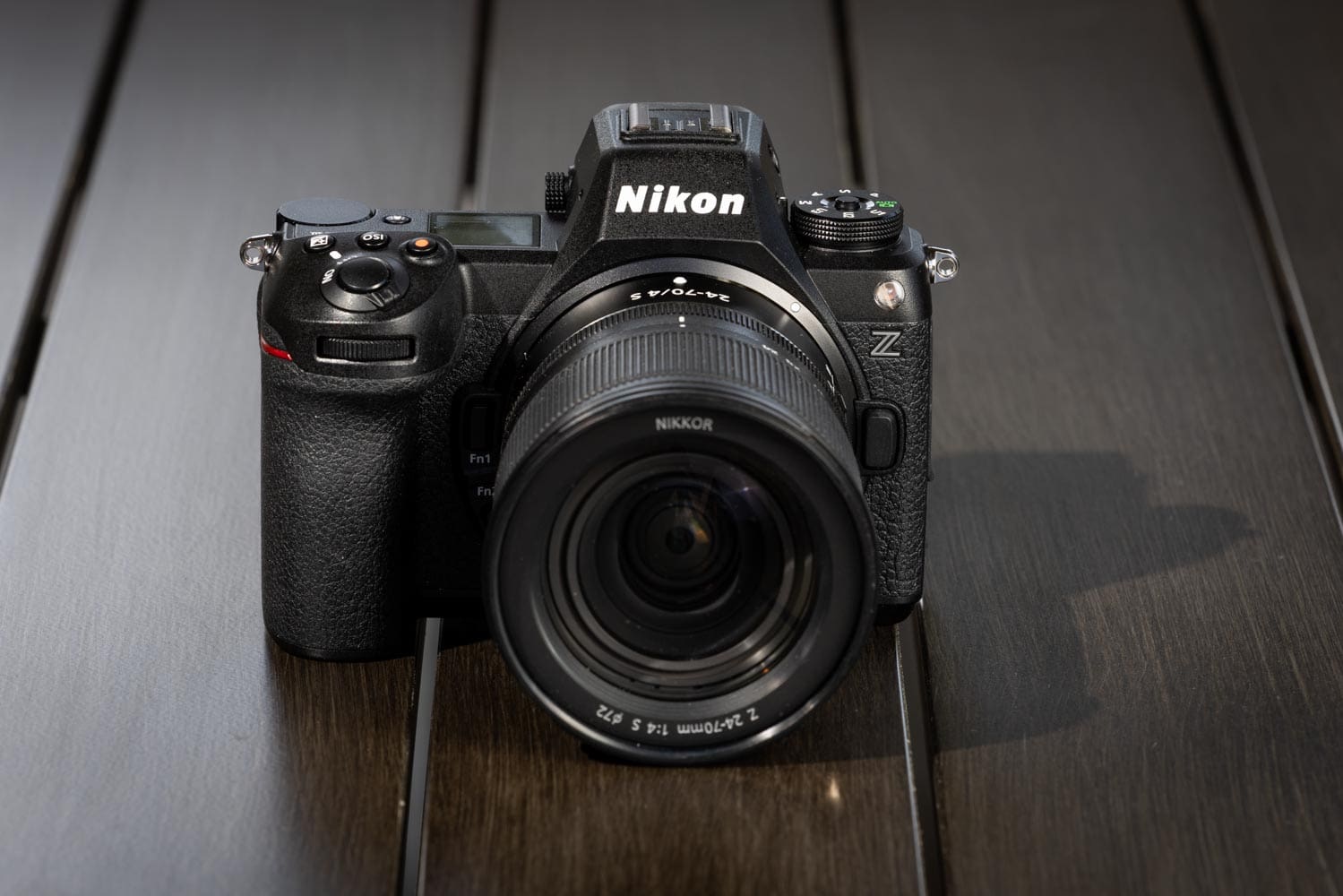
Nikon Z 6III
All three companies proudly claim very fast continuous shooting rates.
Stated continuous shooting rates:
These are the rates available only when using the electronic shutter, though that isn’t always clearly stated.
- Canon R6 Mark III: 30 fps
- Nikon Z 6III: 20 fps
- Sony A7 V: 40 fps
These claimed continuous shooting rates are technically true, but mostly useless if your results are unusable. I will note that there are unusual situations where the type of movement being captured isn’t strongly affected by the slow scanning due to the direction of movement within the frame, but this is highly unusual.
The real drive rates you should be considering are the ones listed for the mechanical shutter. These are the drive rates that you can safely use with all sorts of very fast-moving subjects.
Mechanical shutter drive rates:
- Canon R6 Mark III: 12 fps
- Nikon Z 6III: 14 fps
- Sony A7 V: 10 fps
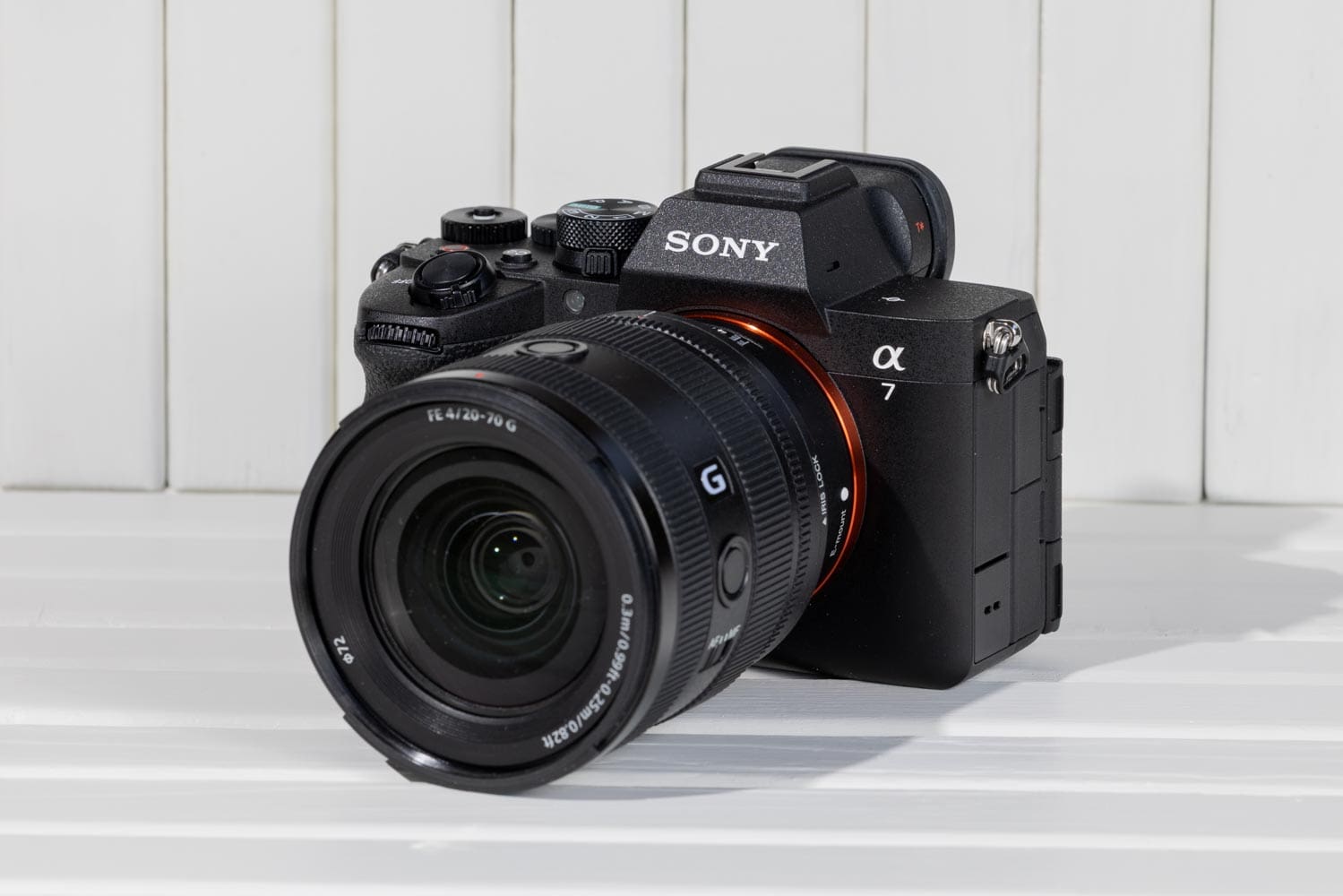
Sony A7 V
Where Do We Go From Here?
I have no doubt that future generations of these mid-range cameras will be better when viewed on the spec sheet. However, the types of improvements and changes seem to be getting smaller and smaller. These smaller steps should not be a surprise; we are 70 years into interchangeable lenses, 40 years into autofocus, 25 years into digital and 10 years into mirrorless systems.
At this point in time, I cannot see the next major development for cameras and lenses. Ten years into autofocus it was clear digital was the next big thing. Ten years into digital and it was clear that mirrorless was the next frontier. Now, ten-plus years into mirrorless, and I can’t see what is next.
I suppose the biggest next thing is following on with the lead that Nikon has taken with the Z9 and Z8 by removing the physical shutter. While this is a notable step forward, the removal of the shutter doesn’t really change the quality of our images or how we capture them. This step requires faster scanning sensors and that aspect does have an impact on those of us who capture fast-moving subjects.
You should expect to see improvements in the scan time and continuous shooting frame rates with future cameras. Most sports can be successfully captured at 10 fps, and most mid-level and upper-level cameras can accomplish this currently, even with their mechanical shutters. A smaller percentage of sports or wildlife photographers will be able to make use of 20–30 fps, and 120 fps is for truly exceptional situations.
If you’ve been waiting for the camera market to settle down so that the camera you buy today isn’t out of date in 6 months, now is a great time. The development cycle for many popular models seems to be slowing down. The typical interval between new models traditionally was between two to three years. In an environment where smartphones have decimated the demand for cameras, the interval between models has stretched out to four years or more. Find your ideal model today and you’re likely to be good for the next 5 to 10 years with a modern, very capable camera.
Check out my Camera Buyer’s Guide if you’d like to see more of my thoughts on this topic.
Become part of John’s inner circle
Sign up for the newsletter here — it’s free.
Want to become a better photographer?
Check out John’s selection of photography and camera classes here.