Perhaps the most intriguing specification of a digital camera is the number of megapixels the image sensor can record. Resolution and sharpness are important factors in photography, and the number of pixels that a camera can record is a critical factor in that regard.The megapixel race of the early digital camera era has waned, but it’s still going on today. How much difference is there in a 24MP vs 45MP vs 66MP camera? Which one is right for you? What are the pros and cons of each? All good questions, so I thought it might be good to take a look at the megapixel race and put things in perspective.
The Golden Era
Back in the days of film, resolution was also important. The difference was that it was the film manufacturers that were bringing forth the improvements. Revolutionary changes were achieved in small increments over large spans of time. Every 4 to 8 years, new film emulsions would be developed and introduced, offering either better color, higher ISO speeds, or finer grain.
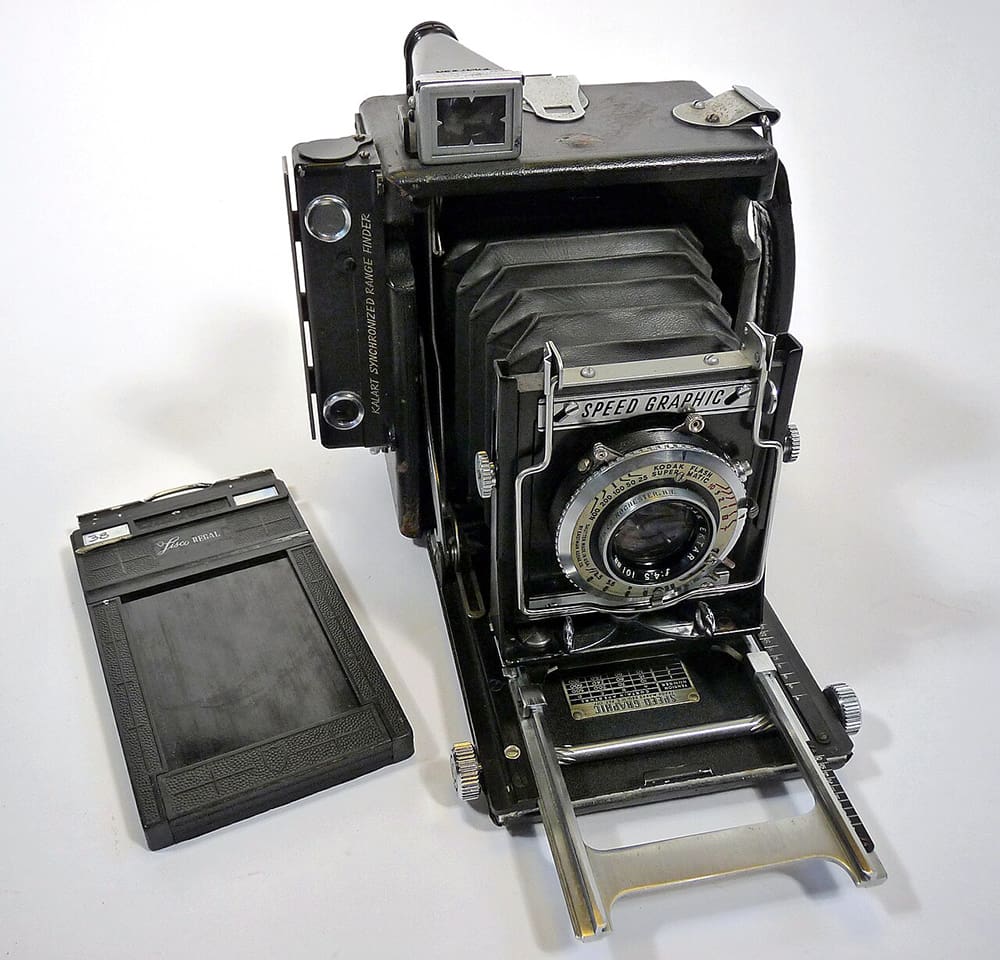
The Speed Graphic, a portable large-format press camera used through the 1940s
[Photo Credit: Wikipedia]
Birth of Digital
The early days of digital were mostly about proving that instant electronic capture could be done. The technology was primitive by modern standards. While there were many challenges to developing the process, improving the resolution was one of the primary goals.
The first digital camera is most frequently credited to Kodak as an engineer working for them assembled it from a variety of parts from other components. Not much of this device would be recognizable as a camera by today’s standards. It weighed almost 9 pounds and had a measly sensor resolution of 100 x 100 pixels, equaling 10,000 pixels. As resolutions increased, 1 million pixels became a gold standard that was called a “megapixel” or “MP.”

Steve Sasson holding the first digital camera he built at Kodak in 1975.
[Photo Credit: Kodak]
The Kodak Frankenstein Era
Kodak was a powerhouse in photography in the 1980s and 1990s. With more than 140,000 employees, Kodak had many divisions devoted to consumer, commercial, professional, medical and military imaging needs. Kodak’s own in-house team developed a 1.4-megapixel CCD sensor in 1986, and the next logical step was to put that into a camera.
Kodak didn’t make professional SLRs, so they partnered with the camera manufacturers to create a digital camera. Throughout the 1990s, Kodak used Nikon and Canon SLR camera bodies merged with their image sensors, batteries and storage units. The sleek cameras were mounted on a bulky and heavy miniature computer, leading to them being referred to as Frankenstein cameras.
Starting with the DSC-100, released in 1990, Kodak would go on to release more than a dozen variations. Early units were marketed to news reporters, journalists and sports photographers, where immediate transmission of images was a major advantage.
The earliest generation of Frankenstein Kodak SLRs was very low in resolution by today’s standards—1.3 to 1.5 megapixels. Standards were different back then, as I recall, any sensor capable of 1 megapixel or more was considered “photorealistic” in quality. Professional photographers were generally only interested in cameras with 1 megapixel or more, as it allowed some versatility in where and how the images were used.
Kodak mostly partnered with Nikon to create the digital SLRs as they were the dominant camera system being used by news photographers. Over the years, a variety of Nikon models would be mated to the Kodak digital system including the F3, F4, F8008s, N90s, Pronea 600i, and N80. Kodak did create cameras with other manufacturers’ models, like the Canon EOS-1n, Hasselblad V mount, Contax 645, and Mamiya 645, but in much smaller quantities.
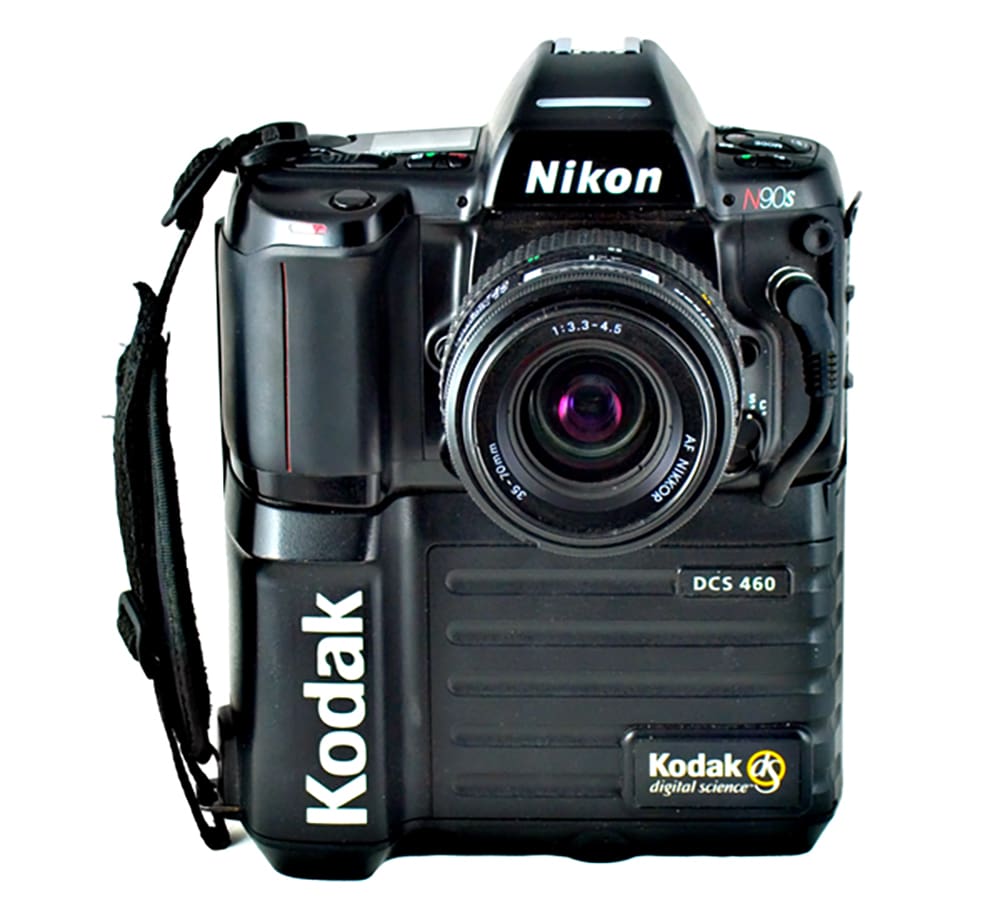
Kodak DCS 460 digital camera back attached beneath a Nikon N90s film camera body.
[Photo Credit: Wikimedia]
A high bar was set in 1995 with the Kodak DCS 460 as it featured a new super high-resolution sensor of 6.23 megapixels. The DCS 460 was built with the Nikon N90s as the base camera unit and, sold for $28,000, or an inflation-adjusted $60,000 in 2026 dollars. More than 5,000 units were produced and sold, making it the most popular of the Kodak DCS cameras.
The hassle and difficulty of using these cameras cannot be overstated. The DCS 460 could shoot 1 frame every 1.7 seconds, and it would take up to 12 seconds to store a single image. The sensor wasn’t full-frame, but rather a smaller version with a crop factor of 1.3x. The camera didn’t have any sort of digital viewfinder or monitor on the back of the camera. You would view your scene through the standard SLR pentaprism viewfinder, and then you would need to download your images from the 6MB of internal storage or the removable PC Card to review your shots.
The 6 megapixels of the Kodak DCS 460 stood as a hallmark of image quality for many years. Kodak didn’t improve upon it until 2002 with the DCS Pro 14n, setting aside some medium-format amalgamations that were developed over the years.
Six megapixels was considered the very best you could do in photography. It was quite on par with the quality of film in its sharpness and resolution. There wasn’t anything you couldn’t do with 6 megapixels, except for maybe a billboard. While clunky to use, the 6 megapixels served the purpose for many photographers. It’s likely that the $28,000 price tag was absorbed by the institution or corporation that many photographers worked for. I would suspect very few were sold to individuals who had a casual interest in photography.
The Start of the Digital Revolution
Between the years of 1995 and 2000, the consumer market for digital point-and-shoots really started to heat up. Photographers started showing real interest in the cameras once they surpassed 1 megapixel. The higher the resolution went, the more types of photographers would become open to the idea of ditching the film and processing costs.
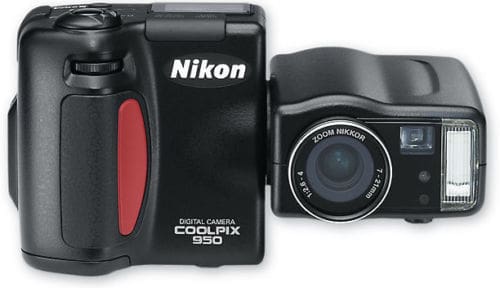
Nikon Coolpix 950 digital camera.
[Photo Credit: Nikon]
The first compact digital camera that became an instant hit was the Nikon Coolpix 950, introduced in early 1999. Featuring a whopping 2MP, actually 1.92 megapixels, it proved to be the perfect gateway into the world of digital photography. The 2 megapixels it offered for only $900 looked pretty enticing, especially when compared to the nearly identical resolution you would get in a Kodak Frankenstein beast selling for $15,000.
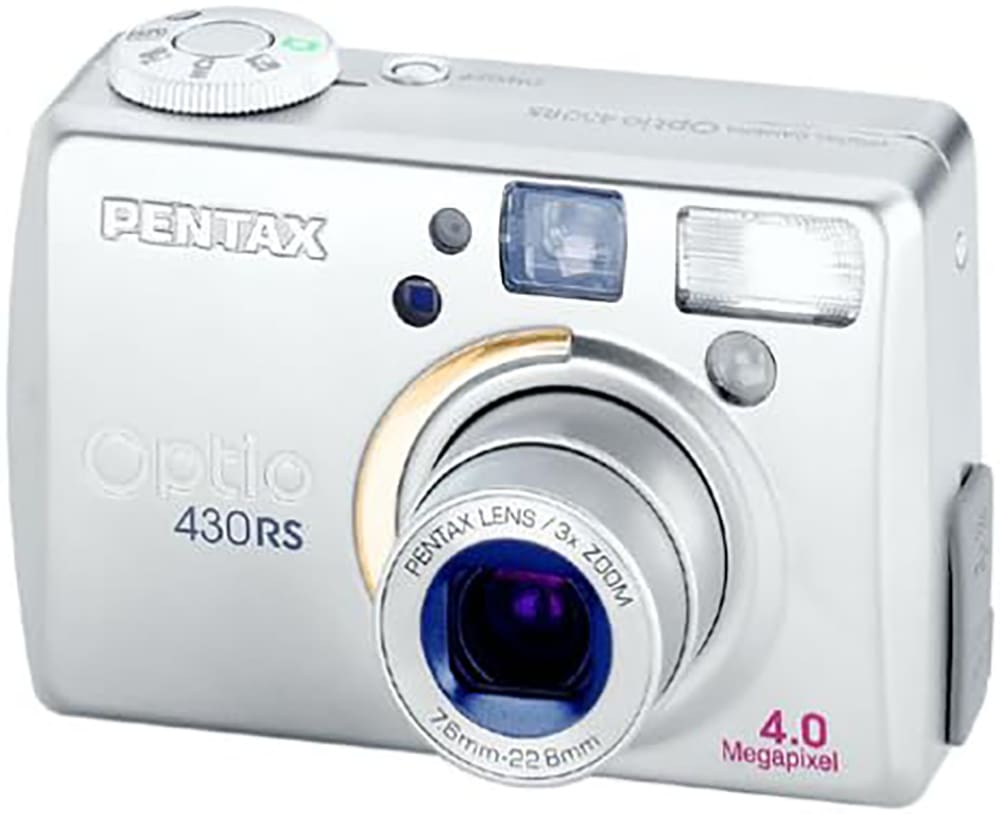
Pentax Optio 430
[Photo Credit: Pentax]
My first digital camera was the Pentax Optio 430, a 4-megapixel camera I purchased in 2003. An attractive DSLR option was not available at the time, and the Optio 430 seemed to be a good balance between small size, manual options and resolution. The manual operation was not what I’d hoped it would be. Yes, you could adjust shutter speed, aperture, and ISO — it’s just that with each of those settings, there were very few options. The camera lasted me three years before I moved on to a DSLR.
Bring on the DSLRs
While Kodak offered their DCS beasts to the professionals working for big-budget enterprises, the independent photographer was waiting for either Canon or Nikon to develop their own home-grown digital SLR. Nikon was the first to market with the D1, a 2.6-megapixel SLR that worked with all of their currently available F-Mount lenses, albeit with a smaller sensor offering a 1.5x crop. The original sale price of $5,600 was a lot, but it was also a lot less than the $10,000 you would spend for a 2MP Kodak.
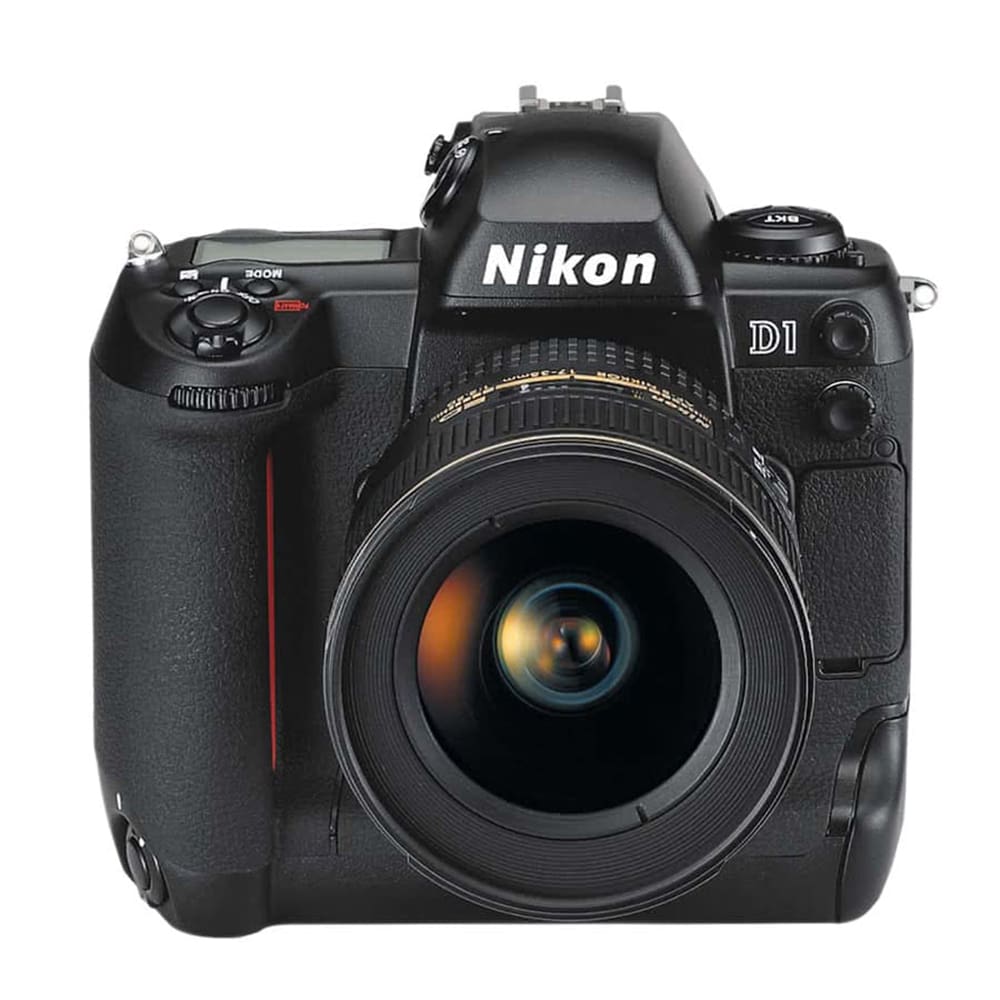
Nikon D1 professional digital SLR camera.
[Photo Credit: Nikon]
A year later, in 2000, Canon introduced the D30 with an impressive 3.1MP for only $3,000. Still a steep entry price for an enthusiast, it was manageable for many photographers. The 3MP meant that you could do “normal” photography with it. It was enough resolution to print quality 8×10 pictures and way more resolution than anyone needed for use on the internet. The consensus was that 3MP was more than enough for most photographers.
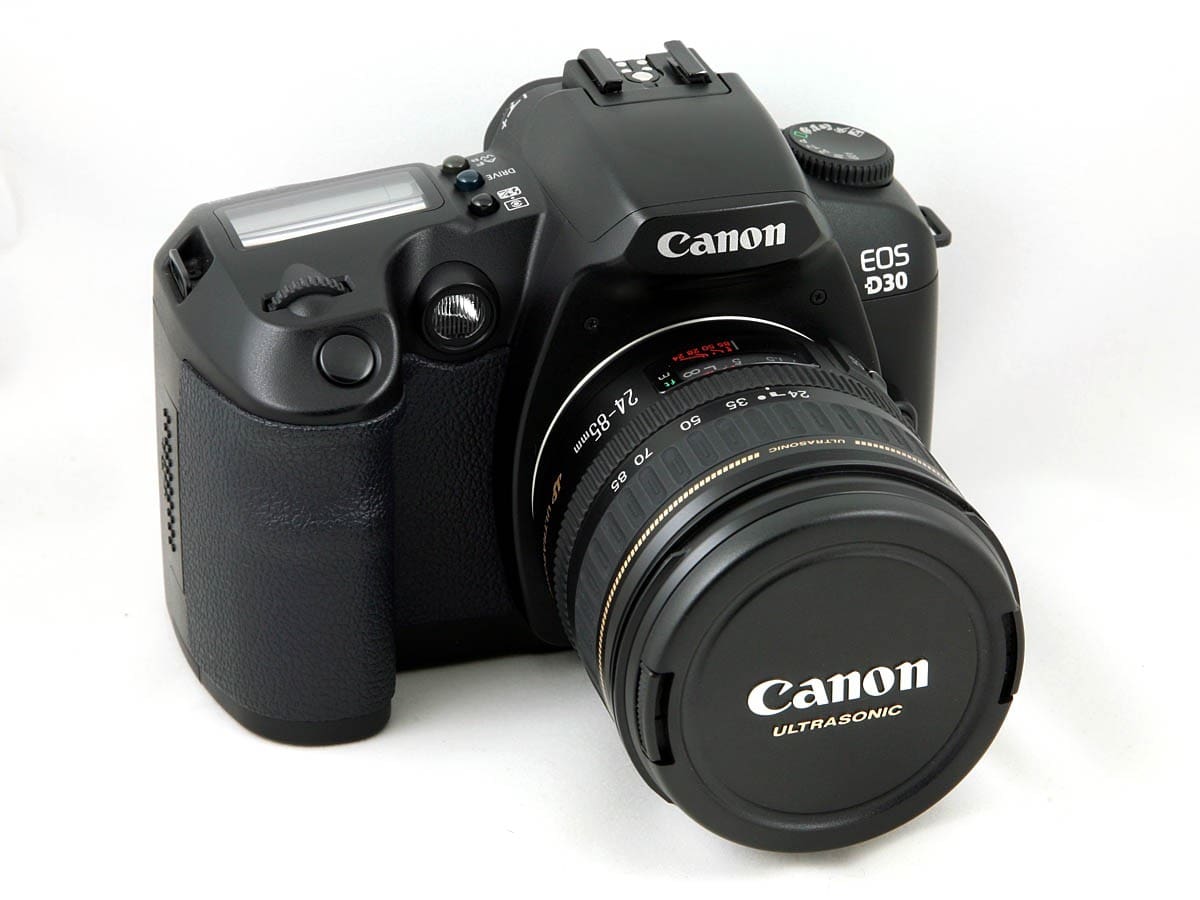
Canon EOS D30 digital SLR camera.
[Photo Credit: Canon]
The very next year, 2001, Canon brought forth their professional EOS-1D that offered 4MP combined with speedy operation. This camera was targeted at the sports photographer with its fast autofocus system and ability to shoot at 8 fps (frames per second). This camera was put in the hands of Sports Illustrated photographers who were able to produce a two-page spread image for the magazine. It was clear that 4MP was more than enough for most professionals.
Only a year later, Nikon introduced the D1X, a 5.9-megapixel camera designed for professionals that offered high resolution for only $6,000. It didn’t shoot as quickly as the Canon 1D, but it was really competing against the Kodak DCS 460 (6.23MP) which was $28,000. The D1X offered unrivaled value — it was only about $1,000 per megapixel, whereas the Kodak cost $5,000 per megapixel.
All of the DSLRs mentioned so far offered sensors smaller than the 35mm film format of 36 x 24mm. Sensors were difficult, and thus expensive, to make; producing them in smaller sizes made the final product much more affordable. The smaller image sensor caused a number of issues with lenses and was a frustration to many photographers.
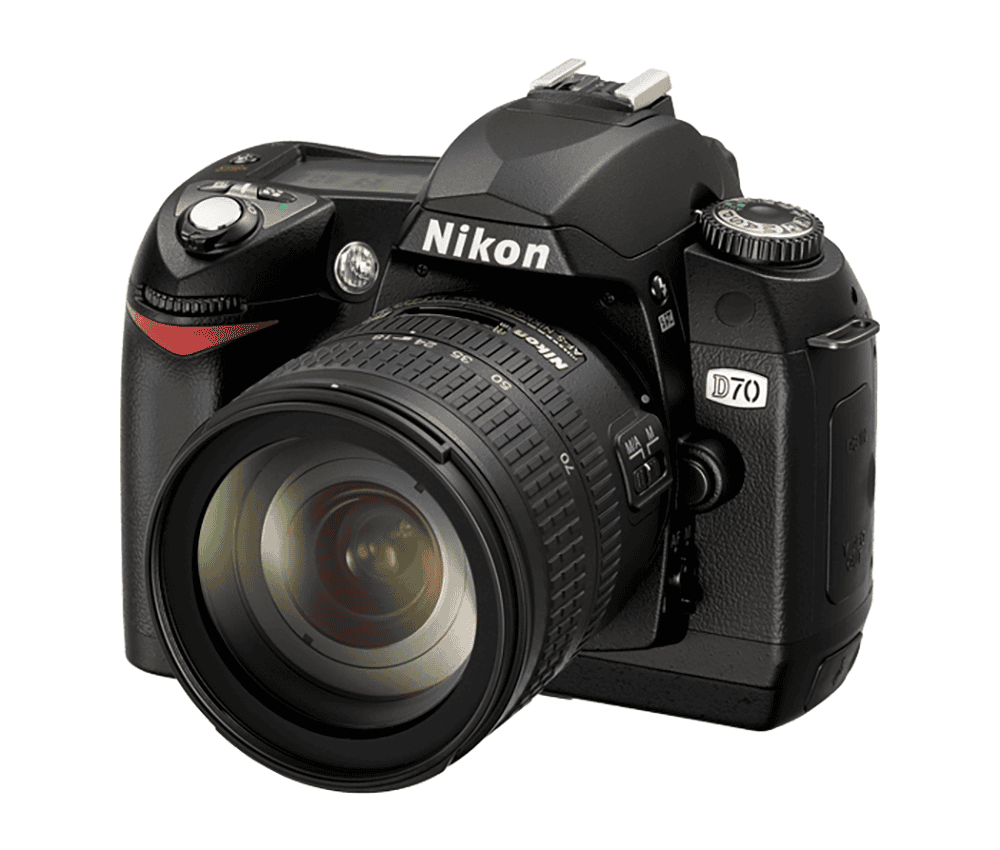
Nikon D70 digital SLR camera with a kit lens attached
[Photo Credit: Nikon Imaging USA]
My first DSLR was the Nikon D70, a 6MP camera that allowed me to use my ample collection of Nikon lenses. It was the first Nikon digital SLR that seemed like a reasonable deal, only $1,000. It fulfilled a long-held dream of a digital camera that equaled the quality of the film that I was used to. The crop factor was a bit annoying for my wide-angle desires. I was compelled to purchase a couple of special crop-frame lenses (DX) that allowed me to shoot wide-angle.
The First Full-Frame DSLR
Officially the first full-frame DSLR commercially available was the Contax N Digital (6MP). This camera was originally introduced in 2000, but didn’t arrive in the camera stores until 2002. There were many issues with this camera; perhaps the most important was the relatively small Contax AF lens system and the small number of people currently using it.
Just a few months later, Canon introduced the EOS-1Ds featuring a full-frame sensor and offering 11MP. As mind-altering as 11MP was at the time, Kodak, days later, brought out their last DSC camera, the 14n, featuring 14MP. This would be Kodak’s last partnership with Nikon or Canon for producing a Frankenstein -like camera. The double-digit megapixel count was difficult to comprehend at the time: if 6MP was useful to the top-end pro, who would need 11MP?
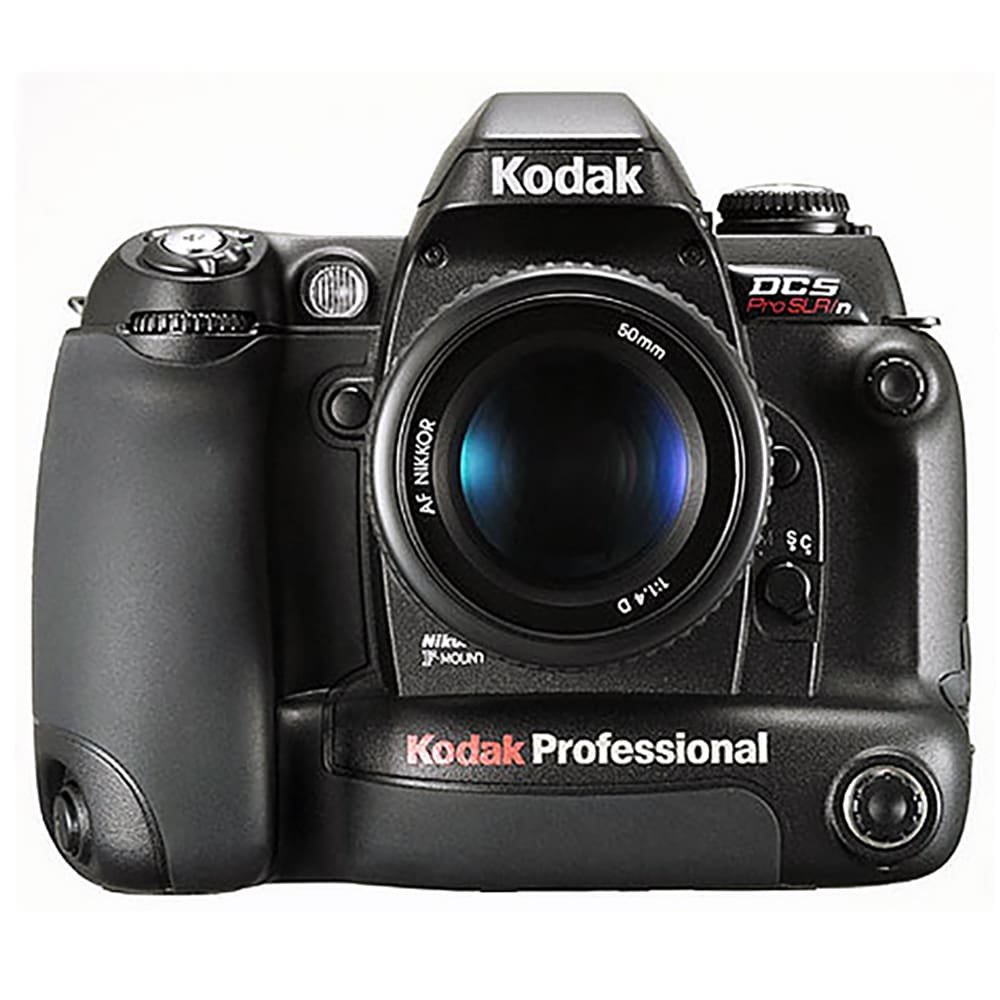
Kodak Pro 14n
[Photo Credit: Kodak]
Image Sensor Production
Very few camera manufacturers make the sensors in their own cameras. Building cameras traditionally was all about metal, plastic, springs and small buttons. Eventually, the advent of autofocus required more electronics and some basic processing chips to be incorporated into the camera. Semiconductor production is on another level from camera production. It requires a great number of resources and costs to bring a production facility up to speed. This was well beyond the capability of most camera manufacturers, so image sensors had to be sourced from specialty chip makers.
Sony’s semiconductor corporation sells sensors to the Sony imaging products and solutions division. I’m guessing Sony gets a discount rate when purchasing from Sony, but that’s just a guess. Those same sensors are also sold to Nikon, Fujifilm, Leica, Panasonic and others. Canon also makes their own sensors, but unlike Sony, they don’t sell them to other camera manufacturers. There are a limited number of other companies out there that also make imaging sensors to be used in cameras. Cameras are only a small segment of the image sensor market — they are also used in phones, drones, security systems, manufacturing, and scientific devices.
Due to the small number of producers, you’ll find very similar megapixel counts in competing cameras. The means of production is not wildly different across the spectrum of manufacturers, and this is why megapixel counts between cameras have been so close.
Point-and-Shoot Scramble
In the first decade of the 2000s, the digital point-and-shoot camera was a hot retail item. In a post-film and pre-phone era, this was the best way to capture your visual memories of vacations, friends and family. Megapixel count was a big factor for a lot of customers, and many people would sacrifice a lot of features and convenience to go from 4 to 5 megapixels.
While the point-and-shoot market was slowly rising in megapixels, resulting in compact, easy-to-use 14 MP cameras, many people were realizing that the quantity of pixels wasn’t always the best way to measure image quality. Putting 14 million pixels on a small sensor required very small pixels. Small pixels were not as good at recording light, and shooting in low-light situations while using a high ISO resulted in noisy images.
While point-and-shoots, over the years, would continue to add more pixels — the Sony DSC-RX100 (20MP), Canon G1 X Mark III (24MP), Fujifilm X100VI (42MP), Leica Q3 (60MP), and Fujifilm GFX100RF (100MP), for example — much of this was accomplished by using ever larger image sensors.
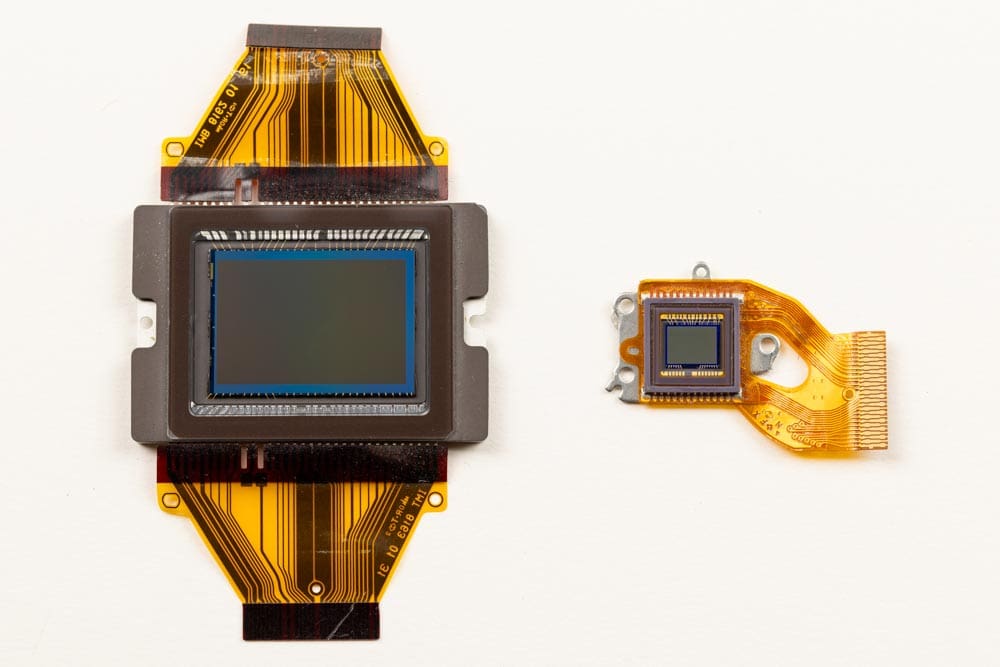
APS-C (23x15mm) and 1/2.3″ (6x4mm) image sensors with flexible circuit ribbons.
Consumer DSLR
The solution for the photography enthusiast looking for better image quality was the growing competition of “affordable” DSLRs. While Canon and Nikon were having their battles at the professional level, they were also trying to outdo each other for the more typical consumer.
The Nikon D7000 line [D7000 (16MP), D7100 (24MP), D7200 (24MP), D7500 (20MP)], along with the Canon xxD line [10D (6.3MP), 20D (8.2MP), 30D (8.2MP,) 40D (10MP), 50D (15MP), 60D (18MP), 70D (20MP), 80D (24MP), 90D (32MP)], proved to be a huge battlefield. One-upmanship with the megapixels was a back-and-forth game between the two longtime rivals.
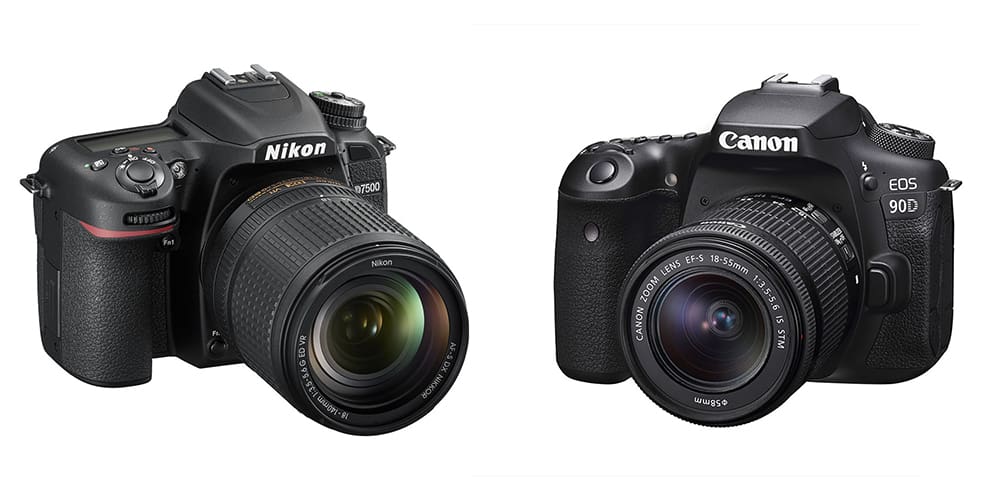
Nikon D7500 & Canon EOS 90D DSLR cameras
It seems at every stage of the game from 3MP to 32MP, the latest generation of camera was finally the camera that would deliver the resolution that you really needed. But there was always a rumor about the next camera that would offer just a bit more in the megapixel range.
I remember people who were trading in their 6MP cameras to upgrade to 8MP for resolution reasons. Yes, they were getting more pixels, but if you compare the lines of resolution, 6MP = 3000 x 2000 vs 8MP = 3456 x 2304, you will see that the difference in the lines of resolution isn’t all that much. Going from 6MP to 8MP feels like a 33.3% increase, because mathematically that’s what it is. However, when you look at the resolution, 3000 lines on the long side compared to 3456, that’s only a 15% increase in linear resolution. Yes, it’s better, but not by much.
I’ve long held the thought that if you wanted a significant increase in resolution, you would need to double what you are currently using.
During this era, I was coveting the Canon EOS-1Ds Mark II mostly because it offered the eye-popping 16.6MP of resolution. What made it special was that it had the minimum standard of resolution required by a notable stock agency for photo submissions. While I didn’t go down that path, I’m sure there were many photographers who simply purchased that camera because it was the ticket to having their digital photos accepted as professional.
Think about that for a minute: a 16MP standard for professional-quality images. How many megapixels does your current camera support?
Mirrorless Cameras
The introduction and rise of mirrorless camera systems didn’t really change the megapixel race. Throughout the 2010s, the typical interchangeable-lens cameras went from 14MP up to 32MP. Each step up offered a bit more potential for cropping and enlargement for those who printed their images. The most typical usage for a digital photograph was to post it on a website or on a social media platform, either of which could be done quite easily with a 3MP camera.
In fact, resizing your images, appropriate to the platform that will host them, is a very important step. Most image-sharing platforms have tight restrictions on the size of images. It’s understandable from a hosting point of view: more data means more storage, which means more costs. Seeing how most people experience the internet on their phones with small screens, images just don’t need a lot of resolution for most needs. Post a large photo on social media and it will be resized and compressed after you have submitted it.
The 4K & 8K Standard
To shoot 4K video, you need roughly 4,000 lines of horizontal resolution — that’s where the name comes from. To be more precise, the UHD 4K standard requires 3840 x 2160 pixels, which results in a video aspect ratio of 16:9.
Should you want a still camera that can shoot video in 4K, you’ll need 2560 lines of vertical resolution to result in the standard 1:1.5 aspect ratio used for stills photography. Multiply the 3840 by 2560 and you get 9.8MP, an easily accessible resolution for a still camera for almost the last 20 years.
Step up to 8K video and you’ll need 7680 x 4320 for your 16:9 video file. For a stills camera with 7,680 in horizontal resolution, you’ll need 5,120 in vertical resolution to achieve that 1:1.5 standard aspect ratio. Multiply 7,680 by 5,120 and you have 39.3MP.
8K is an important reason why there are several modern cameras that feature resolutions just above that 39.3MP range— the Nikon Z9 and Z8, and the Canon R5 and R5 Mark II. Offering this resolution makes it easy to output 8K video. While none of these cameras are great at 8K output, they can at the very least do it, and it’s a big part of the marketing of the cameras.
Where We Sit Today: Point and Shoot
Starting with the point-and-shoot options, you can find everything from 1 to 100 megapixels. The type of camera, cost, and size of the sensor will be the primary reasons for the number of megapixels. If you are comparing two cameras with different pixel counts, it won’t make much difference in resolution between the two unless one camera has more than double the pixel count. There are many factors that affect resolution in point-and-shoots — sensor size, glass quality, zoom range, etc. — which means pixel count will only get you so far.
Where We Sit Today: Mirrorless
Interchangeable-lens cameras available today offer between 20 and 100 megapixels. Base and mid-level cameras between 20 and 32MP should be more than enough for most photographers and most use cases. Higher-end cameras will have 40 to 66MP, and currently only medium-format options will take you up to 100MP or more.
Having more pixels, like 45MP to 66MP, will be most beneficial to those who crop, enlarge, or need to work in great detail on their images. Everyone crops to some degree, and more pixels give you a bit more room to crop tight and still have a usable resolution for a wide variety of uses. However, cropping more than half your pixels away will almost always leave you with an image that is visibly lower in quality than the original. This is true no matter what your starting pixel count is. If you’re cropping more than half your pixels away, you likely need a longer lens.
Not many people are printing their images on a regular basis today, but if you intend to, keep in mind a classic printing standard: 300 dpi (118 dpc). A printed image looks very good if printed at 300 dots per inch (118 dots per centimeter). This would mean that a traditional 8” x 10” (20 x 25 cm) would require 2400 x 3000 pixels (7 megapixels). You could use a higher dpi, but most printing inks and paper aren’t capable of maintaining an accuracy above that 300 dpi standard, so it becomes a meaningless exercise.
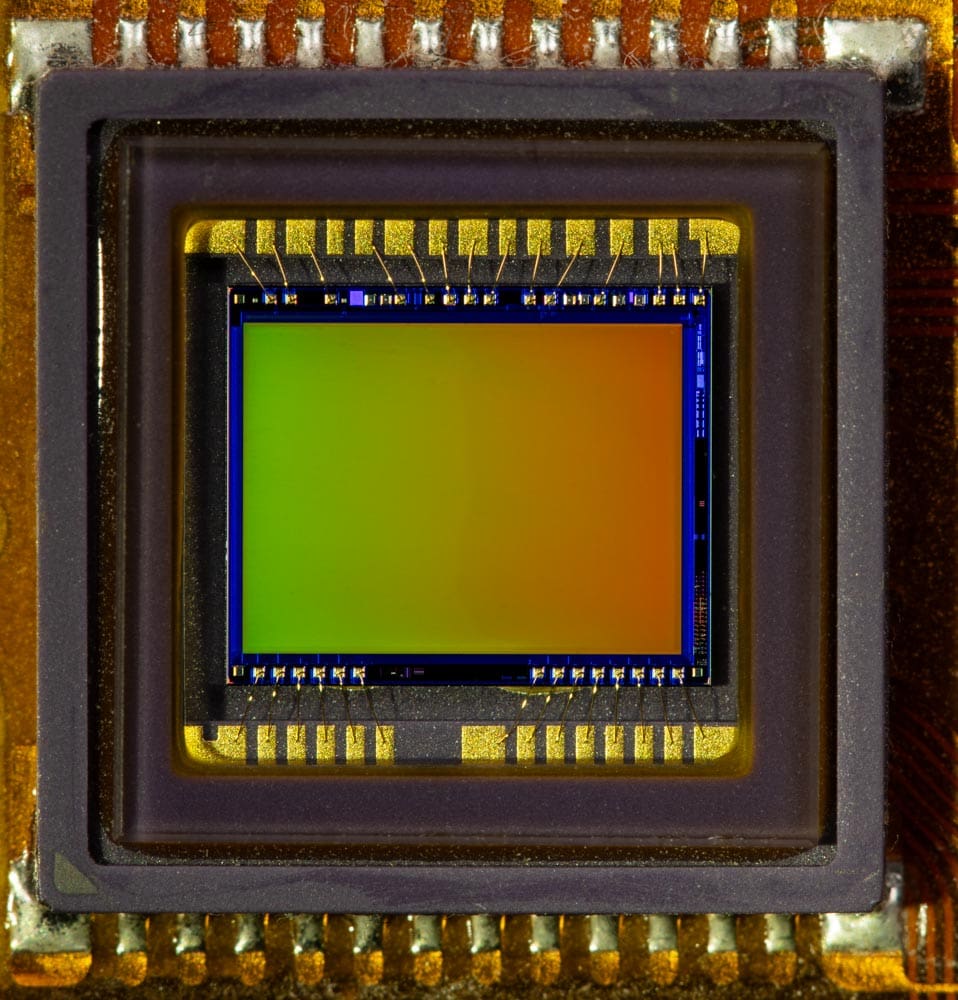
Macro close-up of a camera image sensor chip, showing its colorful surface and wire-bonded connections.
Many modern cameras will have more than 6,000 pixels on the long side, and this means that you could create a print of 20” x 13” (51 x 33 cm). A well-known fact is that you can move your standard down to 240 dpi and still get very high-quality prints if you need to go a bit bigger. With a 240 dpi standard, you could take a 24MP image and print it 25” x 16” (63 x 40 cm).
Even if you don’t print or crop, a high megapixel count can benefit you if you work on your images in post-production in a highly detailed manner. If you work on local selections of your image, having more data to work with allows you to see the affected area more clearly and to be more precise with your selections.
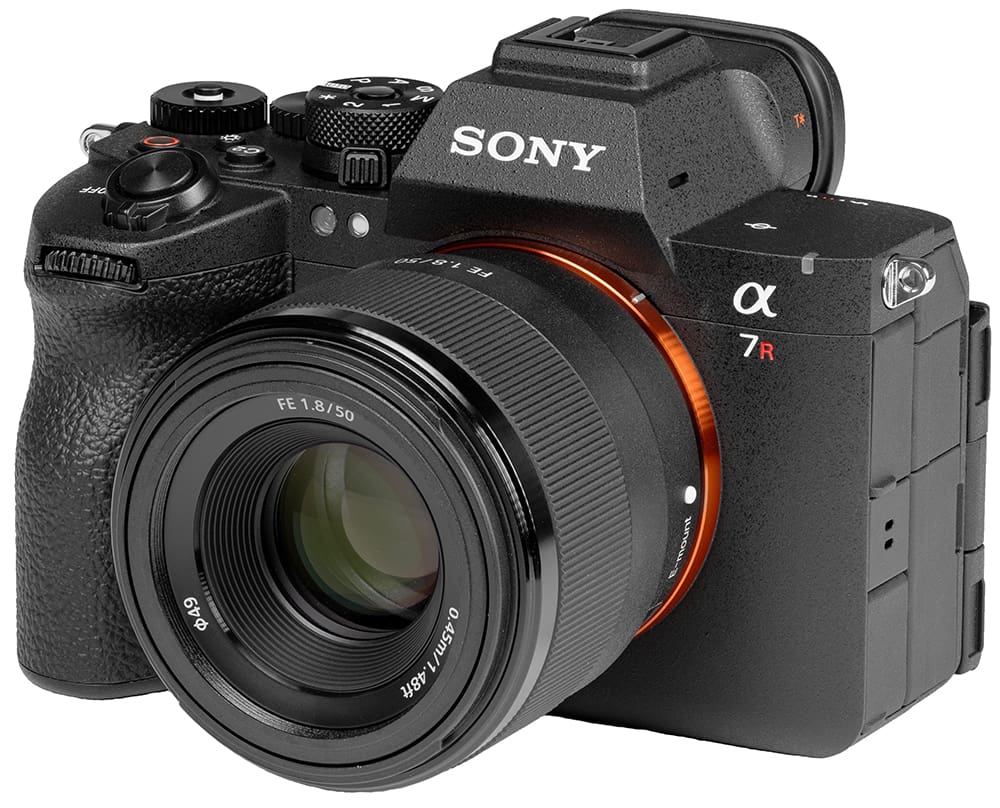
The Sony a7R VI is the highest resolution full-frame interchangeable-lens camera available today, with 66.4 megapixels.
Higher-megapixel cameras are easy to desire. Who doesn’t want more detail to work with? Well, to start with, a lot of professionals don’t want that extra data. Fewer images on a memory card, slower transfers, long waits while your computer builds previews, and larger hard drives are all some of the drawbacks of more megapixels. If you shoot a lot and do a lot of transferring and moving the images, the extra data can seriously slow you down.
Two of the most popular pro sports cameras, Canon R1 and Sony A9 III, are not megapixel monsters — they have just 24MP each. This is more than enough resolution for most professional use cases, and it’s not so big as to cause problems with image transfers.
Where Do We Go From Here?
I predict cameras will continue to climb in their megapixel count, but only in incremental amounts. The great megapixel race is over, for the most part. For now, most photographers will do quite well with 20 to 35MP for most uses, and if you want or need more, there are some 45-66MP options that are quite attractive.
Keep in mind that while every pixel counts, it’s only when you double the count that you will see a significant difference.
Become part of John’s inner circle
Sign up for the newsletter here — it’s free.
Want to become a better photographer?
Check out John’s selection of photography and camera classes here.